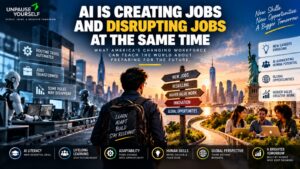
The Era of Smart Work: How Technology Redefines Productivity
For decades, the mantra of the workplace was “work hard.” Long hours, tireless effort, and sheer grit were considered the sole paths to success. While dedication remains a core virtue, the modern professional landscape is shifting. Thanks to technological advancements, the new imperative is to “work smart.” This is a fundamental change, moving us from an era of brute-force labor to one of intelligent efficiency, where technology becomes our most powerful ally in achieving more with less.

From Manual Effort to Automated Efficiency
At its heart, “smart work” is about leveraging tools to automate the mundane. The repetitive, time-consuming tasks that once consumed our days, data entry, report generation, scheduling, and invoice processing, are now handled by software bots and intelligent systems. Robotic Process Automation (RPA) and AI-driven tools streamline these operations, eliminating human error and freeing up valuable time. This isn’t about replacing people; it’s about liberating them. When machines handle the administrative grind, employees can dedicate their energy to high-impact activities that require uniquely human skills: creativity, critical thinking, strategic planning, and building relationships.
AI and the Power of Informed Decisions
Beyond automation, technology provides a superpower that was previously unimaginable: the ability to make data-driven decisions at lightning speed. Artificial intelligence and machine learning algorithms can analyze vast datasets to identify trends, predict outcomes, and provide actionable insights. A sales team, for example, can use AI to forecast market demand and personalize customer outreach, while a project manager can use predictive analytics to identify potential bottlenecks before they happen. This shift moves us from reactive problem-solving to proactive, foresight-driven strategy, turning intuition into a quantifiable, reliable tool for growth.
A New Culture of Connectivity and Collaboration
The rise of smart work is intrinsically linked to the revolution in digital collaboration. The traditional office with its fixed desks and rigid hours is no longer the only model. Cloud-based platforms, video conferencing tools, and shared digital workspaces have dissolved geographical boundaries, enabling seamless teamwork from anywhere in the world. This flexibility not only improves work-life balance for employees but also unlocks a global talent pool for businesses. Real-time document co-editing and instant messaging create a dynamic, interconnected environment where ideas flow freely and projects move faster, fostering a more agile and responsive organizational culture.
The Human Element: Augmenting, Not Replacing
While technology provides the tools for smart work, the human element remains paramount. The future of work is not a battle between man and machine, but a partnership. As routine tasks are automated, the skills of tomorrow are shifting towards those that machines cannot replicate. Adaptability, emotional intelligence, and complex problem-solving are becoming the new currencies of the job market. The most successful professionals will be those who can effectively harness technology as a tool to amplify their own unique abilities, rather than being overshadowed by it.
In conclusion, the era of smart work is not just a trend, it’s the new standard. It is a paradigm shift that recognizes efficiency and intelligence as the true drivers of progress. By embracing automation, leveraging data, and fostering a culture of digital collaboration, we are not just working differently; we are fundamentally transforming the workplace into a more dynamic, productive, and human-centric space. The future belongs to those who learn not just to work hard, but to work smart.
About The Author