
US Envoy Steve Witkoff Arrives in Moscow Amidst Sanctions Deadline and Ceasefire Talks
High-Stakes Diplomacy Underway in Moscow
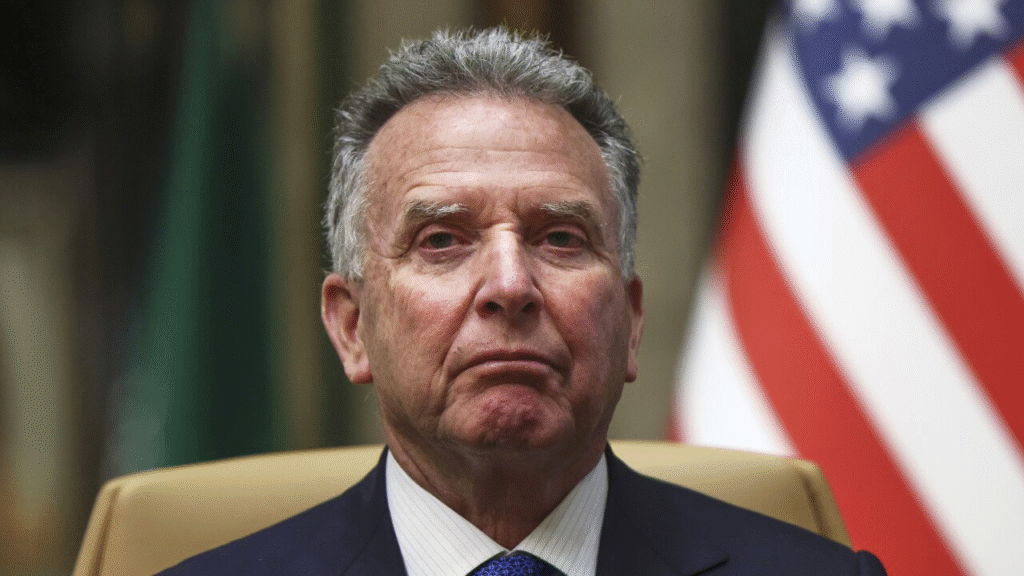
Moscow, Russia – U.S. President Donald Trump’s special envoy, Steve Witkoff, arrived in Moscow today for high-level discussions with Russian officials, just two days before a critical Friday deadline set by the White House for Russia to agree to a ceasefire in Ukraine or face a new wave of stringent economic penalties. The visit marks Witkoff’s fifth trip to Moscow since President Trump took office in January, underscoring the urgency and complexity of the ongoing diplomatic efforts.
The Looming Sanctions Deadline
President Trump has repeatedly warned that if Russia does not halt its military offensive in Ukraine by August 8, the United States will impose “severe tariffs” and other economic sanctions. These measures could also include “secondary tariffs” targeting countries that continue to engage in significant trade with Russia, such as China and India, a move that has already sparked considerable debate and pushback from affected nations. Trump stated that the decision on these sanctions would be made after Witkoff’s discussions with the Kremlin, emphasizing, “We’re going to see what happens.”
Kremlin’s Stance and Dialogue
Upon his arrival at Moscow’s Vnukovo Airport, Witkoff was greeted by Kirill Dmitriev, an aide to Russian President Vladimir Putin and head of the Russian Direct Investment Fund. Footage aired by Russian state media showed Witkoff and Dmitriev engaging in an early morning stroll through Zaryadye Park, near the Kremlin. While the Kremlin had not initially confirmed a meeting between Witkoff and President Putin, it later stated that such a meeting was not ruled out, describing contacts with Witkoff as “important, meaningful, and very useful.” Kremlin spokesman Dmitry Peskov reiterated Moscow’s appreciation for U.S. efforts aimed at ending the conflict.
Ukraine War and Diplomatic Challenges
The visit comes amidst continued intense fighting in Ukraine, with Russian forces reportedly making slow but steady advances in eastern Ukraine while also continuing bombardments of Ukrainian cities. Ukrainian President Volodymyr Zelenskyy had a “productive” conversation with President Trump on Tuesday, during which they discussed Russia’s attacks and the prospect of tougher sanctions. Zelenskyy has consistently urged Western allies to ramp up sanctions, believing they are taking a toll on Moscow’s war machine.
However, Russia has shown little public indication of being willing to concede to Trump’s demands. President Putin recently announced that Russia’s new hypersonic missile, the “Oreshnik,” has entered service, a move seen by some as a show of force. Sources close to the Kremlin suggest that Putin remains skeptical about the impact of further U.S. sanctions and that his military objectives in Ukraine take precedence over improving relations with Washington. Russia has consistently maintained that any peace settlement must be on its terms, including demands for Ukraine to cede territory and renounce NATO ambitions—conditions Kyiv has repeatedly rejected.
The Path Forward: Uncertainties and Implications
Witkoff’s mission is widely seen as a last-ditch effort to broker a breakthrough before the sanctions deadline. While the U.S. seeks a deal where “people stop getting killed,” the deep-seated disagreements between the parties, particularly regarding territorial concessions and Ukraine’s future alignment, present formidable obstacles. The outcome of these talks will not only determine the immediate course of the Ukraine conflict but also have significant implications for global trade relations, particularly concerning countries like India and China, which face potential secondary tariffs due to their continued energy trade with Russia. The world watches closely as this high-stakes diplomatic play unfolds in Moscow.
About The Author