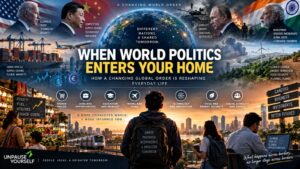
SCO Summit Navigates Geopolitical Divides and Humanitarian Crises
TIANJIN, CHINA – World leaders gathered in Tianjin for the annual Shanghai Cooperation Organisation (SCO) summit, a high-stakes meeting dominated by sharp geopolitical tensions and ongoing global crises. The summit served as a critical platform for some of the world’s most powerful nations, including Russia, China, and India, to articulate their views on pressing international issues, from regional conflicts to global security and economic cooperation. The divergent messages from the key leaders underscored the complex and often contradictory nature of the alliances within the SCO.

Putin Defends Ukraine Campaign and Blames Western Policies
Russian President Vladimir Putin used his time at the podium to deliver a robust defense of his nation’s military actions in Ukraine. In a clear and defiant tone, he reiterated Moscow’s long-held position that the conflict was not an unprovoked act of aggression but rather a necessary response to what he characterized as the aggressive expansion of the North Atlantic Treaty Organisation (NATO) and other “Western policies” that he claims threatened Russia’s security interests. Putin’s remarks were aimed at solidifying support among nations in the SCO bloc, many of which have avoided outright condemnation of the Ukraine conflict, and at portraying the West as the primary instigator of the current geopolitical instability. His presence at the summit highlighted Russia’s ongoing pivot toward its Eastern partners in the face of widespread sanctions and diplomatic isolation from Europe and North America.
China Calls for Opposition to “Cold War Mentality”
As the host nation, China’s President Xi Jinping set a broader, more philosophical tone for the summit. In his address, he urged regional leaders to unite in opposition to a “Cold War mentality.” This statement, a recurring theme in Beijing’s foreign policy rhetoric, is a clear critique of what China sees as the formation of U.S.-led alliances aimed at containing its rise. Xi’s message promoted a vision of a multipolar world where no single nation or bloc can dictate international affairs. His speech underscored China’s growing influence within the SCO and its ambition to reshape the global order, advocating for a security framework based on dialogue and mutual respect rather than on military alliances and confrontation.
India Focuses on Terrorism and Peaceful Resolution
Indian Prime Minister Narendra Modi navigated a delicate balance between the two great powers. While he called for an end to the Ukraine conflict and a return to peaceful diplomacy, his primary focus was on the persistent threat of terrorism. Modi’s specific mention of a recent attack in Jammu and Kashmir was a powerful reminder that for India, regional security concerns often take precedence over distant geopolitical conflicts. His statement served as a direct call for a unified regional front against all forms of terrorism, a message that resonated with other nations in the SCO facing similar extremist threats. By highlighting this issue, Modi reinforced India’s role as a major player in regional security and emphasized its unique position as a democratic power within the primarily authoritarian bloc.
The Broader Context of Global Crises
The political maneuvering at the summit occurred against a backdrop of severe real-world crises that demand regional cooperation. Just as leaders were debating security doctrines, news emerged of a devastating magnitude 6.0 earthquake in eastern Afghanistan, killing hundreds and leaving thousands more in desperate need of aid. At the same time, neighboring Pakistan was grappling with historic floods in its Punjab province, impacting millions of lives. While not the official focus of the SCO agenda, these humanitarian disasters underscored the shared vulnerability of member states to natural calamities and the need for practical, collective action beyond political posturing. The juxtaposition of high-level political discourse with urgent human suffering served as a powerful reminder of the multifaceted challenges that nations within the SCO must confront.
About The Author