What We Can Know: A Reckoning Across a Century
4/5 ⭐⭐⭐⭐
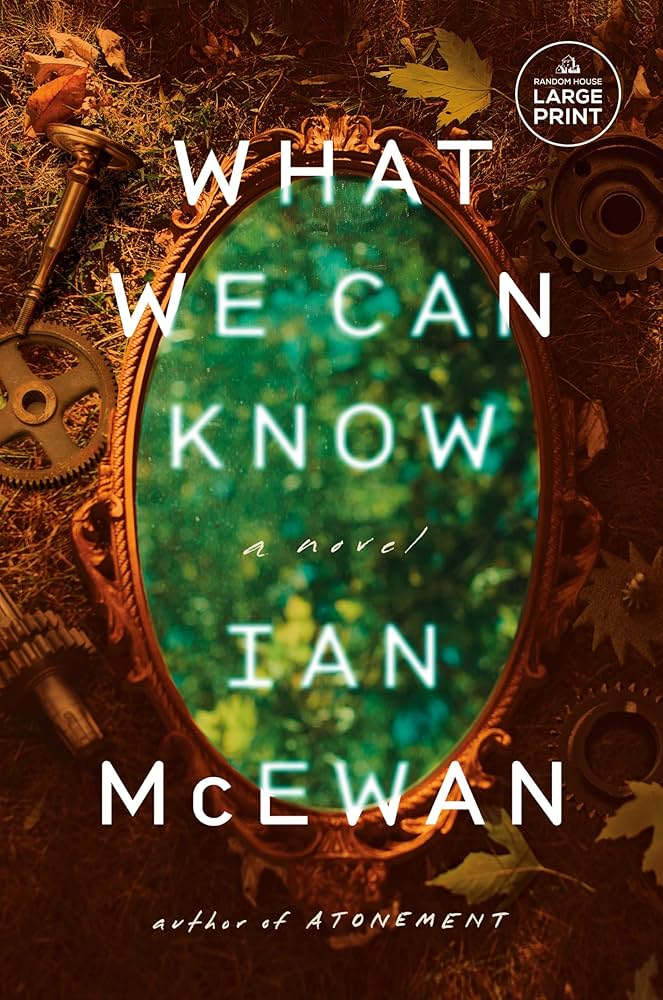
Ian McEwan’s eighteenth novel, What We Can Know, is a sophisticated, genre-bending masterpiece that cements his position as a preeminent observer of the human condition across time. Set primarily in 2119, in a UK partially submerged by rising seas and defined by the climate catastrophes of the past, an era they grimly refer to as “the Derangement”, the novel is ostensibly a literary detective story. Yet, it quickly morphs into a profound meditation on history, memory, moral culpability, and the elusive nature of truth.
The Search for the Lost Poem (2119)
The narrative centers on Thomas Metcalfe, an academic at the fictional University of the South Downs, who is obsessed with the early 21st century and, specifically, a lost poem. This poem, “A Corona for Vivien,” was written by the renowned poet Francis Blundy and read aloud at a dinner party in 2014, only to vanish forever. Metcalfe’s quest to reconstruct the poem and the events of that fateful night drives the first half of the novel. McEwan masterfully uses Metcalfe’s archival research, which provides him access to the digital residue of the past, to create a captivating blend of nostalgia and horror. Metcalfe’s future perspective allows McEwan to offer searing social and political commentary on the self-sabotaging blindness of our present day, where “everyone knew about climate change but failed to act.”
Prose, Structure, and the Elusive Truth
McEwan’s customary prose, elegant and surgically precise, elevates the structural ambition of the work. The extended scene detailing Blundy’s reading of the “Corona,” filtered through the internal, often petty and distracted, monologues of the drunk dinner guests, is a brilliant comedic and philosophical set piece. It vividly demonstrates the novel’s central concern: how impossible it is for any singular art or archive to capture a unified truth of an event, let more alone an entire era.
The Daring Narrative Pivot
The second half of the novel executes a daring and brilliant narrative swerve, shifting perspective to re-examine the mystery of the poem and the motivations of the original characters, particularly Vivien, the poet’s wife. This pivot dismantles Metcalfe’s romanticized historical assumptions, revealing a much darker, messier, and intensely personal truth involving entangled loves, deceit, and a brutal crime. This structural duality provides the novel with its propulsive, thriller-like tension while forcing the reader to confront the ethical limits of intellectual knowledge versus emotional understanding.
Final Assessment: A Resonant Legacy
Ultimately, What We Can Know functions as a poignant retrospection on the legacy we leave for the future. It is a powerful homage to the value of the humanities in a recovering, science-focused world, and a compelling argument for the enduring complexity of the human heart, which resists easy cataloging by either history or technology. By allowing the past, present, and future to address one another, McEwan has created a novel that is both intellectually heady and emotionally resonant, deserving of its place as one of his finest late-career achievements.
About The Author