
The Six Triple Eight: Tyler Perry’s Essential Chronicle of Courage and Mail
4/5 ⭐⭐⭐⭐
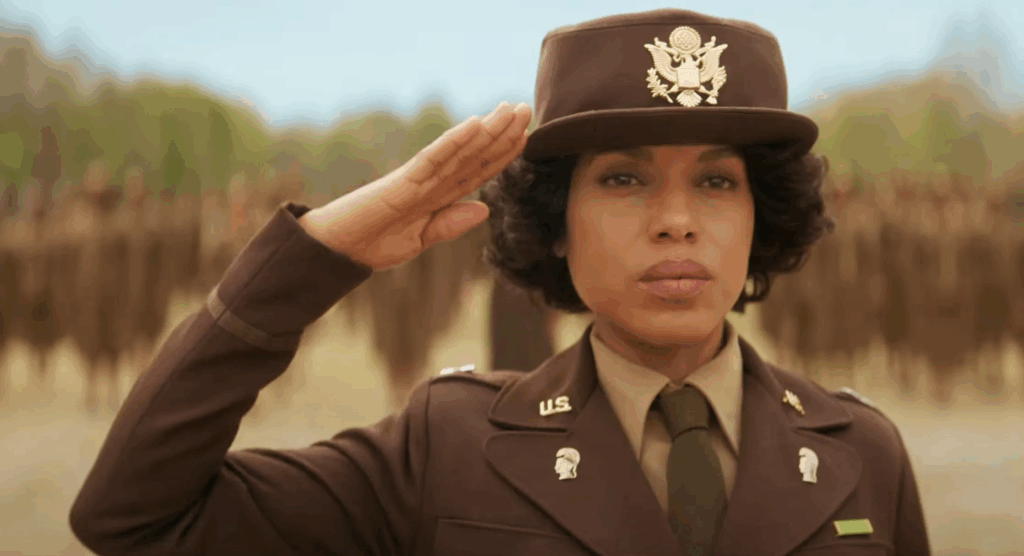
Tyler Perry’s The Six Triple Eight is not merely a film but a necessary historical corrective, chronicling the extraordinary achievements of the 6888th Central Postal Directory Battalion. As the only all-Black, all-female U.S. Army unit to serve overseas during World War II, the Six Triple Eight faced a double burden: fighting the Axis powers abroad while battling endemic racism and sexism within their own ranks. Perry, directing from his own screenplay, delivers a respectful and powerful tribute that, while structurally conventional, foregrounds a heroic chapter of military history too often ignored.
The Mission and the Motto: “No Mail, Low Morale”
The film begins by establishing the monumental task assigned to the 855 women, led by the formidable Major Charity Adams (portrayed with magnetic authority by Kerry Washington). They are deployed first to Birmingham, England, and later to Rouen, France, to tackle an overwhelming backlog of over 17 million pieces of morale-crushing mail. The mission is simple but seemingly impossible: fix a broken, disorganized system that threatens the spirit of the U.S. troops. The movie effectively visualizes the scale of this logistical nightmare—warehouses filled to the ceiling with letters—and the ingenious solutions the women devised, driven by their motto, “No mail, low morale.” This section serves as a compelling testament to the unit’s discipline, ingenuity, and sheer force of will under adverse conditions.
A Double Battle: Against Prejudice and the Clock
The thematic heart of The Six Triple Eight lies in the unit’s struggle against the discriminatory realities of the 1940s American military. The women are housed in substandard barracks, subjected to overt disrespect by male (often white) officers, and constantly required to prove their competence. Perry handles this conflict with sensitivity, emphasizing not the suffering itself, but the resilience and grace with which the women—including the spirited Private Mary McLeod (Erica Ash) and the fiercely loyal Captain Noel (Oprah Winfrey)—maintained their focus on duty. The film makes clear that their victory was twofold: clearing the mail backlog in record time and shattering preconceived notions about the capabilities of Black servicewomen.
Performance and Directional Focus
While Perry’s direction is straightforward and largely relies on traditional biopic pacing, it is grounded by stellar ensemble performances. Kerry Washington anchors the film with a layered performance as Major Adams, showcasing the emotional and administrative tightrope she walked as a leader determined to protect her women while achieving an impossible goal. The chemistry among the battalion members effectively captures the solidarity forged in shared hardship. If the film occasionally errs on the side of reverence, it is forgivable, as its priority is documenting and celebrating, ensuring the factual record of the 6888th’s legacy is clear and impactful.
Final Assessment: An Essential Piece of History
The Six Triple Eight is more than military drama; it is an act of historical reclamation. It succeeds as a rousing story of overcoming racial and gender barriers through excellence, diligence, and unwavering patriotism. Though it may lack the stylistic flourishes of more avant-garde cinema, its narrative power is undeniable. The film is essential viewing for anyone seeking to understand the full complexity of the American experience during World War II, paying long-overdue homage to the trailblazers who ensured that, against all odds, the mail got through.
About The Author