
Trump Renames Department of Defense to ‘Department of War,’ Sparks Controversy Over G20 Summit Venue
WASHINGTON, D.C. – In a series of sweeping and controversial moves, President Donald Trump has issued an executive order to officially rebrand the Department of Defense as the “Department of War,” while also announcing that the 2026 G20 summit will be hosted at his golf resort in Miami, Florida. The actions have ignited fierce debate over both American military posture and the ethical boundaries of presidential power.
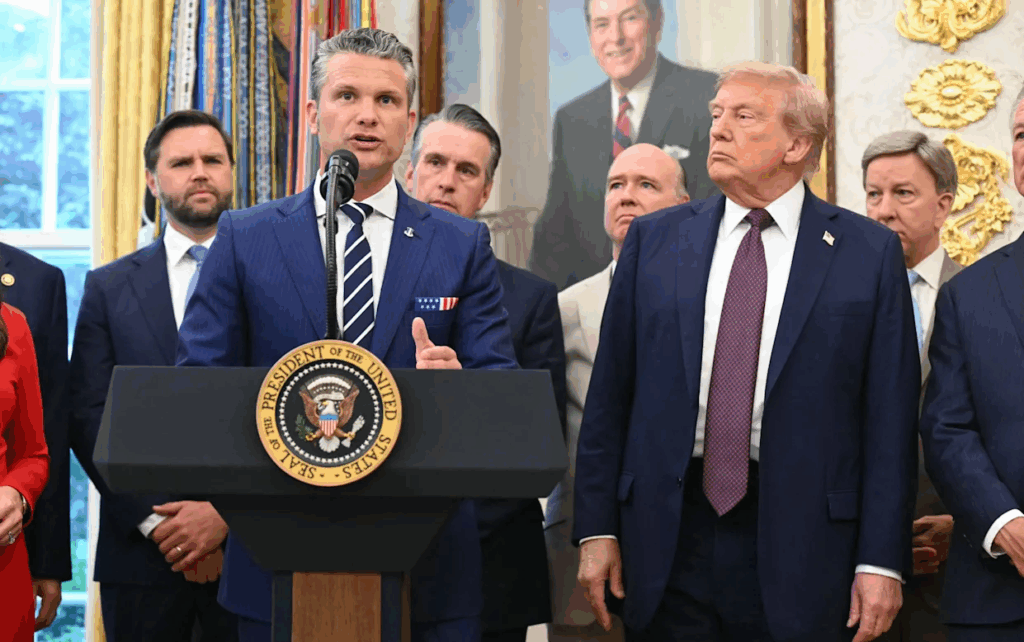
The Department of War
The renaming of the Pentagon, a title it has held since 1949, is a symbolic shift aimed at projecting American military strength and what the administration calls a “warrior ethos.” Speaking from the Oval Office, President Trump stated that the name change was a necessary return to a “stronger” identity. “We won the first world war, we won the second world war, we won everything before that and in between,” Trump said, arguing that the subsequent change to “Defense” was a “woke” move.
The executive order, however, does not legally supersede the 1949 National Security Act, which formally established the Department of Defense. As a result, the administration is using “Department of War” as a secondary, non-statutory title in official correspondence and public communications. The move has been met with sharp criticism from Democrats and some military figures who argue it glorifies conflict and is a costly, performative gesture. Senator Tammy Duckworth, a military veteran, questioned the spending on new signs and letterhead, suggesting the funds would be better used to support military families and diplomatic efforts. Defense Secretary Pete Hegseth, who has adopted the title “Secretary of War,” has championed the change, asserting that it will refocus the military on “war-fighting, lethality, meritocracy, standards and readiness.”
G20 Summit at Trump National Doral
Simultaneously, the announcement that the 2026 G20 summit will be held at the Trump National Doral resort in Miami has revived ethical concerns from his first term. The decision echoes his prior attempt to host the G7 summit at the same property in 2020, a plan he abandoned amid widespread bipartisan criticism. Critics argue that hosting a major international event at a president’s private property represents a significant conflict of interest and a violation of the Constitution’s emoluments clause, as foreign governments would be required to spend money at the president’s business.
President Trump has defended the choice, claiming that the Doral resort is the “best location” for the gathering and that his organization “will not make any money on it.” He cited the resort’s proximity to the airport and its ability to provide each delegation with a separate building. Miami Mayor Francis Suarez has also voiced support, calling the decision a “tremendous boom” for the local economy. Despite these assurances, the move has drawn scrutiny from ethics watchdogs and political opponents who point to the precedent of the 2020 G7 plan, which was ultimately scrapped due to similar concerns and public backlash.
Broader Implications and Reactions
Both actions are seen as central to President Trump’s efforts to redefine his administration’s approach to national and international affairs, signaling a more aggressive and self-assured foreign policy while also challenging conventional norms regarding the use of public office for private gain. The dual announcements ensure that the coming months will be dominated by debate over the meaning of American strength and the ethical standards of the nation’s highest office.
About The Author