
The Second Brain: How Your Gut Microbes Shape Your Mood
Have you ever had a “gut feeling” about something or felt “butterflies in your stomach” when nervous? These aren’t just figures of speech. They are direct evidence of a profound and constant conversation happening between your brain and your gut. This intricate communication network is known as the gut-brain axis, and at the heart of it lies your gut microbiome, a bustling ecosystem of trillions of microorganisms that can directly influence your mood and mental health.
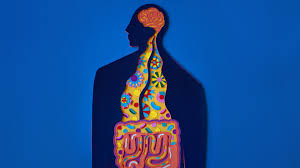
The Enteric Nervous System: Your “Second Brain”
Hidden within the walls of your digestive system is the enteric nervous system (ENS), a vast network of over 100 million neurons. It’s so complex and can operate so independently that scientists have affectionately dubbed it the “second brain.” While it can’t compose poetry or solve a math problem, its primary job is to manage the entire process of digestion, from swallowing to nutrient absorption. It is this “second brain” that is in constant, two-way communication with your central nervous system (CNS), sending signals back and forth through a crucial nerve pathway: the vagus nerve.
Gut Microbes: Your Mood’s Unsung Producers
The microorganisms in your gut microbiome do more than just help you digest food. They are tiny chemical factories, producing a wide range of compounds that directly affect your brain and mood. One of the most significant is serotonin, a key neurotransmitter often referred to as the “happiness chemical” for its role in regulating mood, sleep, and appetite.
Remarkably, over 90% of the body’s serotonin is produced in the gut by enterochromaffin (EC) cells, with gut microbes playing a critical role in this production. They create metabolites and other compounds that signal these EC cells to release serotonin. Other important neurotransmitters, like dopamine and GABA (gamma-aminobutyric acid), are also influenced or directly produced by your gut microbes. When the balance of your microbiome is disrupted, a state known as dysbiosis, it can lead to a reduction in these mood-regulating chemicals, potentially contributing to feelings of anxiety or depression.
The Gut-Brain Axis: A Bidirectional Link
The connection is not one-way. A healthy gut microbiome can lead to a healthy mood, but a stressed mind can also disrupt the gut. The vagus nerve acts as a superhighway, transmitting signals from the gut to the brain and vice versa. Emotional stress, for example, can trigger changes in gut motility and cause inflammation, leading to a vicious cycle.
This bidirectional link has significant implications for mental health. Research has shown that individuals with conditions like irritable bowel syndrome (IBS) often have higher rates of anxiety and depression. While for years this was thought to be a result of the mental state causing the physical symptoms, we now understand that the reverse is also true—an irritated gut sends signals that can trigger mood changes. Furthermore, studies have found that people with depression often have different gut microbial compositions than healthy individuals, with lower levels of certain beneficial bacteria.
Cultivating a Healthier Mind Through Your Gut
Understanding this connection opens up new avenues for improving mental well-being. A diet rich in prebiotic and probiotic foods can help foster a balanced and diverse microbiome.
- Probiotics: Live microorganisms found in foods like yogurt, kefir, sauerkraut, and kombucha that add beneficial bacteria to your gut.
- Prebiotics: Non-digestible fibers in foods like bananas, onions, garlic, and whole grains that feed the good bacteria already in your gut.
While a healthy diet is not a cure-all for clinical mental health conditions, prioritizing gut health can be a powerful complementary strategy. It highlights the profound interconnectedness of our bodies and minds, and reminds us that true wellness starts from within—specifically, from our gut.
About The Author