The Breaking Point: A Deep Dive into Tyler Perry’s “Straw”
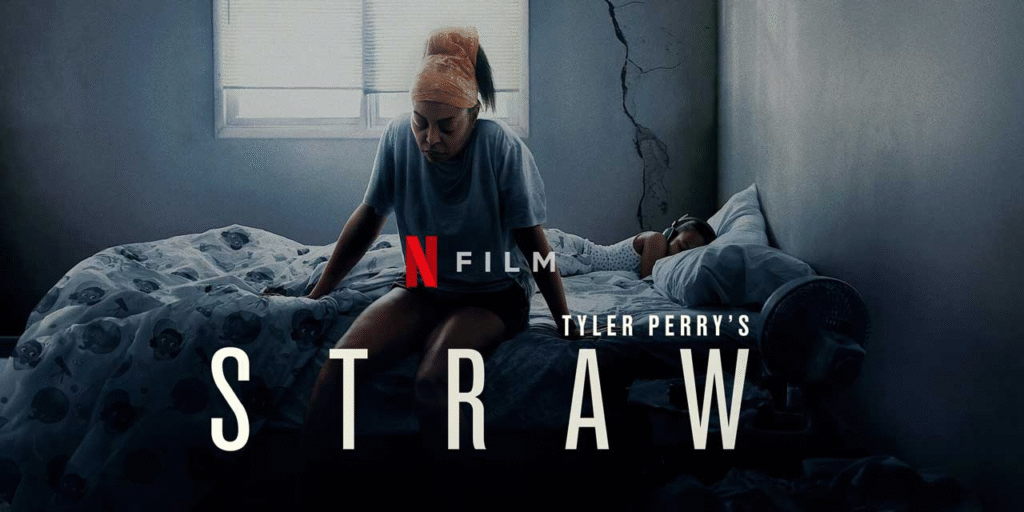
Tyler Perry’s latest Netflix offering, “Straw,” is a psychological crime drama that plunges viewers into the harrowing experience of Janiyah Wiltkinson, a single mother whose life unravels in a single, catastrophic day. Starring Taraji P. Henson in a powerhouse performance, the film, written and directed by Perry, has resonated deeply with audiences, topping Netflix charts despite a mixed critical reception. “Straw” isn’t just a story of a woman pushed to the brink; it’s a stark examination of systemic failures, the crushing weight of poverty, and the devastating impact of unacknowledged grief.
The Weight of the World on Her Shoulders
At its core, “Straw” explores the profound human experience of hitting rock bottom. Janiyah’s day begins with a cascade of misfortune: facing eviction, losing her job, battling for her ill daughter’s well-being, and encountering callous authority figures. Each setback is a fresh wound, a further tightening of the noose around her already strained existence. Perry, known for tackling social issues, uses Janiyah’s plight to highlight the brutal realities faced by those on the margins, emphasizing the seemingly insurmountable cost of being poor and the feeling of being utterly invisible to society. As Perry himself stated, the film is about “people, who are on the margins, who are not being seen, not being acknowledged, not being represented.”
A Shocking Twist and Its Impact
What sets “Straw” apart from many of Perry’s previous works, and indeed from many thrillers, is its audacious twist ending. What initially appears to be a desperate act of a woman driven by rage and perceived injustice in a bank standoff, is revealed to be the terrifying manifestation of grief-induced psychosis. Her daughter, Aria, who serves as the driving force behind Janiyah’s every action throughout the day, is, in fact, a hallucination. This revelation transforms the narrative, reframing Janiyah’s seemingly irrational and violent actions as a desperate attempt to protect a child who is already gone. This twist, while divisive for some critics who found it veering into the melodramatic, undeniably amplifies the film’s emotional impact and deepens the audience’s sympathy for Janiyah.
Taraji P. Henson’s Masterful Performance
Taraji P. Henson’s performance as Janiyah is undeniably the film’s anchor. She portrays the character with a raw intensity and vulnerability that makes Janiyah’s descent into desperation palpable. Even when her actions become increasingly extreme, Henson ensures that the audience remains connected to Janiyah’s profound pain and her desperate maternal love. Her ability to convey the emotional turmoil of a woman losing her grip on reality is a testament to her acting prowess, leading many viewers and even some critics to laud her performance as Oscar-worthy. Supporting performances from Sherri Shepherd as the empathetic bank manager Nicole, and Teyana Taylor as Detective Kay Raymond, further ground the narrative amidst the unfolding chaos.
Critical Reception and Audience Resonance
While “Straw” has achieved significant streaming success, becoming Netflix’s most-watched movie in its debut week of 2025, critical reception has been mixed. Some critics have pointed to Perry’s signature blend of drama and melodrama, and at times, a perceived lack of finesse in the writing. However, the film’s undeniable resonance with audiences underscores Perry’s ability to tap into universal themes of struggle, resilience, and the devastating consequences of societal neglect. “Straw” serves as a powerful, albeit at times harrowing, reminder of the invisible battles fought by so many and the urgent need for empathy and systemic change. It’s a compelling exploration of how far a person can be pushed before they truly reach their “last straw.”
About The Author