
Wisdom of the Bayou: A Review of John Kennedy’s How to Test Negative for Stupid
⭐⭐⭐⭐ 4/5
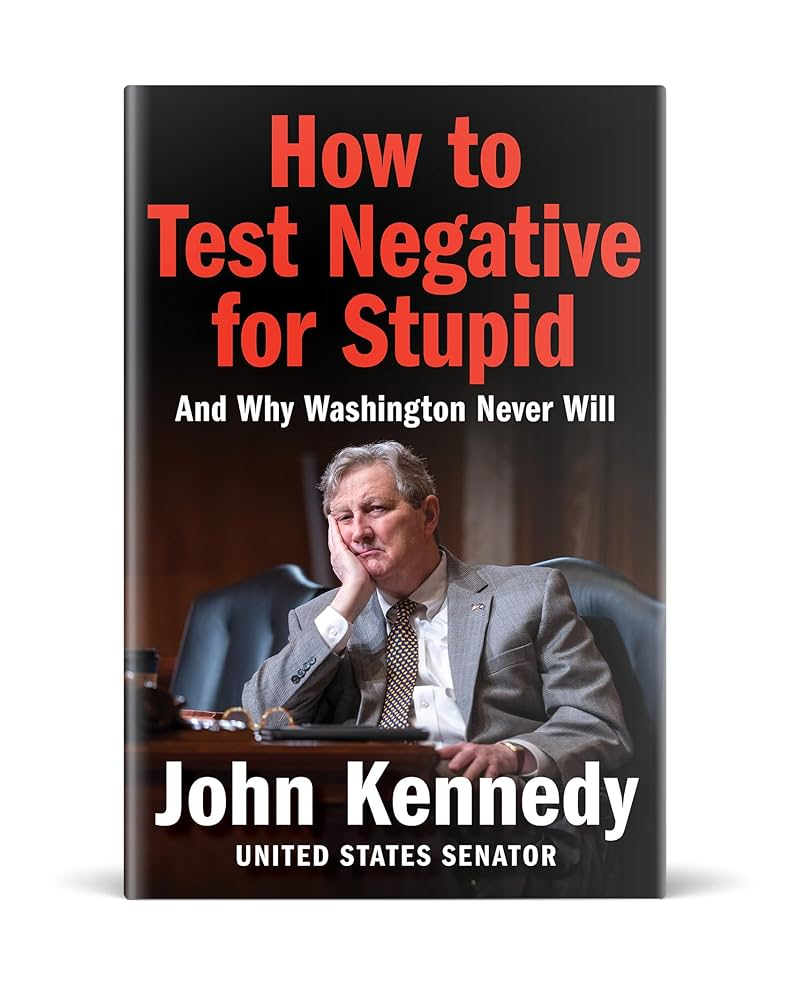
Senator John Kennedy’s How to Test Negative for Stupid: And Why Washington Never Will is less a conventional political memoir and more a sharply-witted, often exasperated, guide to the fundamental failures of common sense within the American political landscape. Drawing on his folksy Louisiana charm and razor-sharp legal intellect, Kennedy delivers a series of diagnostic essays on what he perceives as the institutional ‘stupidity’ endemic to the capital. The book functions as a blend of philosophical commentary and observational satire, offering a refreshing, if occasionally repetitive, critique aimed squarely at bureaucratic bloat and ideological rigidity. It will strongly resonate with readers who feel disconnected from the complexities and perceived absurdities of Washington D.C.
The Diagnostic of ‘Stupid’
Kennedy’s central conceit is to redefine political failure not as malicious intent, but as a failure of basic intelligence, logic, or willingness to engage with reality. He frames his arguments through easily digestible anecdotes and punchy, memorable aphorisms that have become his trademark. The book systematically targets areas where complexity, be it in healthcare, environmental policy, or fiscal responsibility, is manufactured by politicians to obscure simple, common-sense solutions. This approach allows him to transcend traditional partisan lines, often criticizing both Democratic and Republican failures to prioritize practicality over dogma. His writing is driven by an underlying urgency to restore transparency and accountability, making a clear case for prioritizing results over rhetoric.
Aphorisms and the Voice of the Voter
The most compelling aspect of the book is Kennedy’s distinctive voice. He successfully translates the frustration of the average American voter into articulate, if pointed, political commentary. His analysis, though lacking the deep, academic policy dive of some works, shines when he connects Washington’s actions to their real-world consequences, demonstrating how abstract policies become tangible burdens for working families. By using humor and homespun wisdom, he effectively positions himself as an outsider voice within the establishment, making complex issues accessible. However, this commitment to punchy delivery occasionally means that the solutions proposed are sometimes presented with an almost too-simple confidence, failing to fully acknowledge the intricate trade-offs inherent in governance.
The Limits of Common Sense
While the book’s diagnosis is powerful, its promise in the subtitle—to explain why Washington never will, often relies on a cynical, defeatist tone. The critique of systemic dysfunction is strong, but the analysis of the mechanisms that sustain it (such as campaign finance, gerrymandering, or media polarization) sometimes feels secondary to the enumeration of logical errors. Critical readers may seek a deeper exploration of the structural and historical roots of the bureaucratic inertia Kennedy detests. The book is at its weakest when it moves from witty observation to prescribing quick fixes, which risks oversimplifying the very institutional challenges it sets out to expose.
Ultimately, How to Test Negative for Stupid is an engaging, entertaining, and highly readable political polemic. It serves as an excellent primer for those who want their political analysis delivered with a dose of skepticism and a refreshing lack of pretense. While it may not provide the definitive roadmap out of Washington’s woes, it masterfully captures the spirit of public frustration and offers a necessary reminder that clarity and common sense should remain core virtues in public service.
About The Author