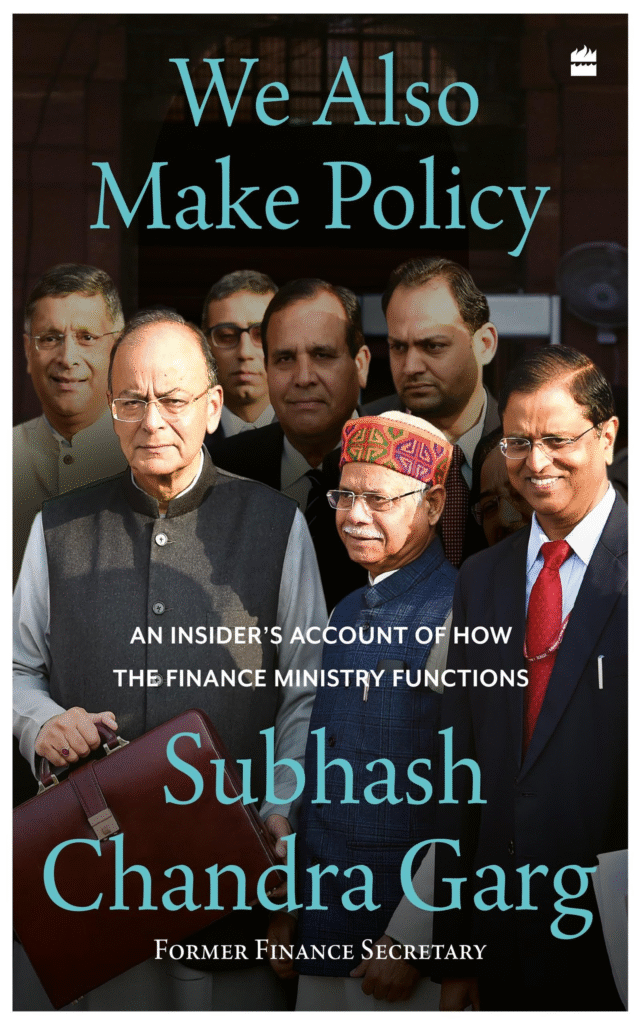
Unveiling the Corridors of Power: A Deep Dive into “We Also Make Policy” by Subhash Chandra Garg
Ratings: 5/5 ⭐⭐⭐⭐⭐
An Insider’s Lens on Policy Making
Subhash Chandra Garg’s “We Also Make Policy: An Insider’s Account of How the Finance Ministry Functions” offers a rare and invaluable glimpse into the intricate machinery of India’s Finance Ministry. As a former Finance Secretary, Garg brings a wealth of experience and a unique perspective to the table, demystifying the often-opaque processes of economic policymaking. This book is not merely a memoir but a detailed exposition of the challenges, triumphs, and bureaucratic nuances that shape India’s fiscal landscape.
Navigating the Ministry’s Complexities
The book is structured to guide the reader through various critical aspects of the Finance Ministry’s operations. Garg meticulously details the formulation of the Union Budget, the complexities of public debt management, the intricacies of financial sector reforms, and the strategic decisions behind major economic initiatives. He sheds light on the interplay between political imperatives and economic realities, revealing how policy is not just made, but also influenced by a myriad of stakeholders. The narrative is enriched with anecdotes and personal reflections, making complex economic concepts accessible to a broader audience without sacrificing depth.
The Power of an Insider’s Account
One of the book’s greatest strengths lies in its “insider’s account.” Garg doesn’t shy away from discussing the internal debates, the pressures from various ministries, and the constant balancing act required to steer the nation’s economy. His candid observations on the decision-making process, the role of various departments, and the impact of global economic trends provide a comprehensive understanding that would be difficult to glean from external analyses. The book particularly excels in its detailed breakdown of specific policy decisions, offering context and rationale that were previously unavailable to the public.
Minor Criticisms and Overall Impact
However, the book is not without its minor shortcomings. While Garg’s perspective is undoubtedly authoritative, it is inherently subjective. Readers might occasionally wish for a more critical self-reflection or a deeper exploration of alternative viewpoints on certain policy choices. At times, the sheer volume of technical detail might overwhelm readers less familiar with economic jargon, though Garg generally does a commendable job of explaining complex terms.
A Must-Read for Policy Enthusiasts
In conclusion, “We Also Make Policy” is an essential read for anyone interested in India’s economic governance, public policy, or the functioning of its bureaucracy. It serves as a valuable resource for students, policymakers, and general readers alike, offering unparalleled insights into the inner workings of one of India’s most powerful ministries. Garg’s contribution is significant, providing a transparent and informative account that enriches our understanding of how economic policy truly comes to life. It’s a testament to the dedication and intellectual rigor required to navigate the complexities of national finance.
About The Author