
The Empathy Engine: How Movies Train Your Brain to Feel for Strangers
We’ve all been there: sitting in a darkened theater, heart pounding, tears welling up, or feeling a surge of righteous anger for a character who doesn’t even exist. We know they are actors, the events are fictional, and yet, for two hours, their pain becomes our pain, their triumph, our joy.
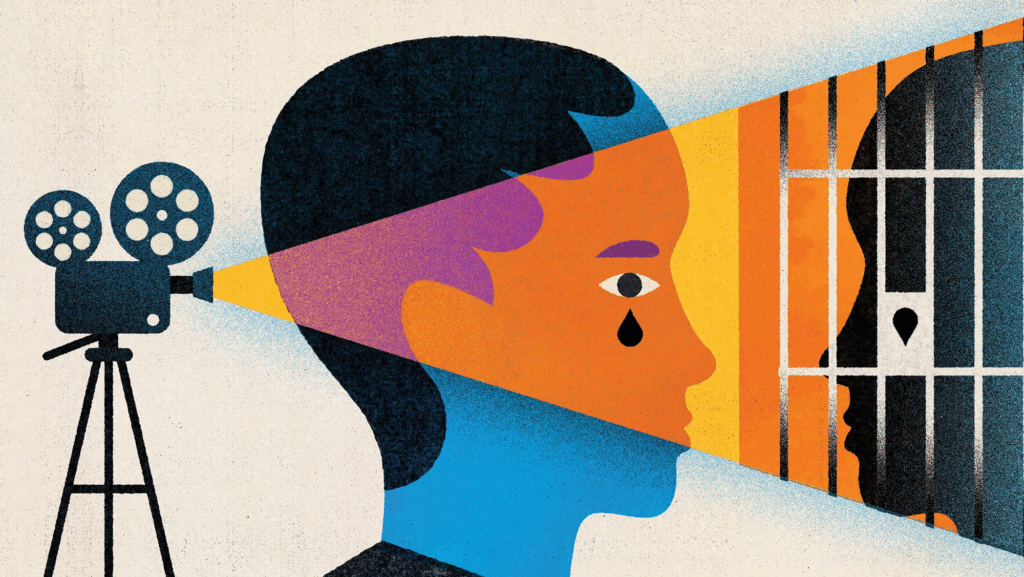
This profound connection isn’t magic; it’s a deliberate, neurological phenomenon. Movies, when crafted well, are highly efficient empathy engines, meticulously designed to bypass our rational mind and activate the parts of our brain that allow us to step into another person’s shoes—even a stranger’s.
Mirror Neurons: The Biological Basis of Feeling
The primary mechanism at play is the mirror neuron system. These special neurons fire both when we perform an action and when we observe someone else performing that same action. In the context of film, when we see a close-up of a character crying, our mirror neurons activate as if we were crying, allowing us to immediately simulate their emotional state.
Directors exploit this with precision. A simple cut to a protagonist’s terrified face in a tight close-up instantly transmits their fear to you. This is pure, raw emotional processing—we physically feel the emotion before our conscious brain can fully analyze the plot point.
Perspective-Taking: The Art of Living Another Life
Beyond simple mirroring, cinema excels at training us in perspective-taking. This is the cognitive component of empathy: understanding why someone feels what they feel, based on their life circumstances.
A well-constructed screenplay forces us to spend time with characters whose lives, struggles, and beliefs may be vastly different from our own. We might follow the journey of an immigrant struggling with a new language, a soldier dealing with PTSD, or a villain whose backstory reveals deeply rooted pain. The narrative structure, which reveals information gradually and shows us the world through the character’s eyes (often literally through point-of-view shots), forces us to construct a psychological profile for them. By the end of the movie, we don’t just know their story; we have temporarily lived their experience.
This temporary immersion is critical. Researchers suggest that the practice of simulating another person’s life in a low-stakes environment like a movie theater strengthens the neural pathways responsible for real-world compassion.
The Sound of Silence and the Power of the Shot
It’s not just the actors that drive empathy; it’s the entire cinematic toolkit:
- Sound Design: A character’s internal anxiety isn’t just shown; it’s heard through hyper-realistic, amplified sounds like heavy breathing or a pounding heartbeat, directly hooking into our fight-or-flight response.
- Editing and Pace: Slow-motion sequences or long takes during moments of grief or realization force us to linger on the character’s emotional experience, denying us the cognitive escape of a quick cut.
- The Score: Music guides our emotional reaction, cueing us when to feel sad, hopeful, or tense, ensuring a unified emotional response across the entire audience.
Bringing the Empathy Home
Ultimately, the power of the film medium isn’t just in making us feel something during the credits. It’s in the carry-over effect. When we leave the theater, we take fragments of that simulated experience with us.
If a movie successfully deepened your understanding of poverty, mental illness, or injustice, it subtly alters the lens through which you view the next stranger you encounter. You might not agree with the characters’ actions, but you are more likely to understand their motives. Cinema doesn’t just entertain; it gently, and powerfully, expands the boundaries of our moral circle, making the world outside the screen a slightly more compassionate place.
About The Author