
The Duality of Man: A Review of Hermann Hesse’s Steppenwolf
⭐⭐⭐⭐⭐ 5/5
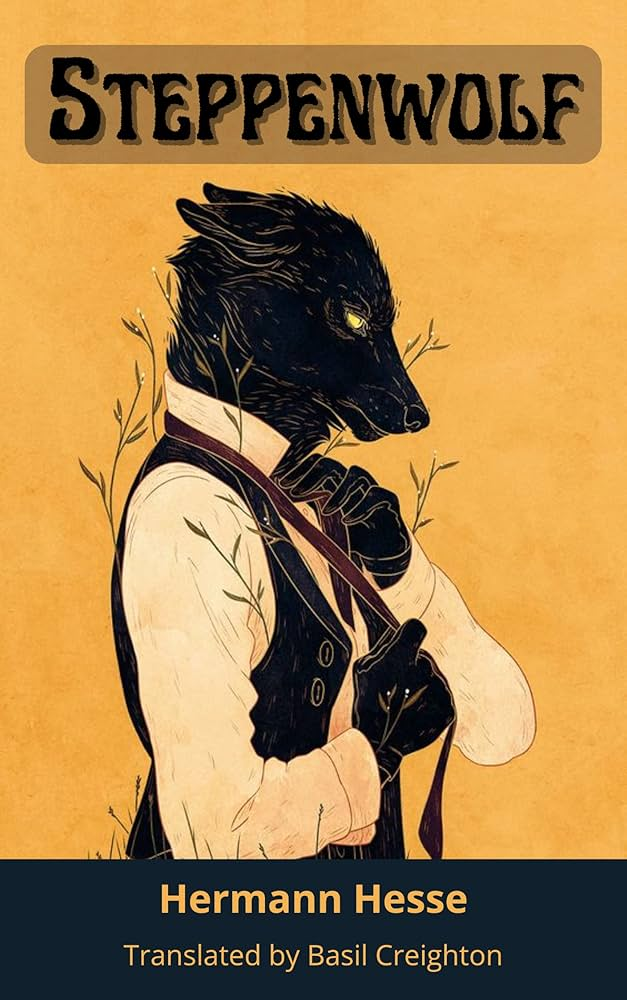
Hermann Hesse’s Steppenwolf is not merely a novel; it is a profound and unsettling psychological mirror. First published in 1927, this existential masterpiece delves into the tormented soul of Harry Haller, an aging intellectual who feels utterly alienated from the conventional world. The title, “Steppenwolf,” refers to his self-perception as a wild, solitary creature from the steppes, a being of two natures: a sophisticated, artistic man and a primal, wolfish beast. This duality is the central conflict of the novel, an internal civil war that drives Haller to the brink of despair.
The Tormented Soul of Harry Haller
The genius of Hesse’s work lies in its unflinching portrayal of this internal struggle. Haller despises the “bourgeois” society he inhabits—its shallow comforts, its predictable routines, and its intellectual conformity. Yet, he is also dependent on it, a “cultivated man” who enjoys its music and art. His anguish stems from the irreconcilable gap between his refined, spiritual self and the carnal, aggressive “wolf” that rages within. This conflict makes him an archetypal outsider, a figure who, though written almost a century ago, feels remarkably contemporary in his struggle with modern alienation.
The Journey to the Magic Theater
The narrative takes a surreal turn with Haller’s encounter with the mysterious Hermine and the flamboyant jazz musician, Pablo. These characters are not simply people; they are agents of change who challenge Haller’s rigid worldview. They introduce him to a world of dance, drugs, and spontaneous living, a counterpoint to his morose introspection. The climax of this journey is the enigmatic “Magic Theater,” a realm accessible only to the truly mad. This theatrical space is a brilliant symbolic device where Haller’s fragmented psyche is laid bare, forcing him to confront the myriad personas and contradictory desires that make up his being. It is in this surreal, kaleidoscopic hall of mirrors that he begins to understand that his personality is not a simple duality, but a mosaic of countless souls.
A Timeless Reflection
Hesse’s prose is both beautiful and melancholic, guiding the reader through the labyrinthine corridors of Haller’s mind. The novel serves as a powerful critique of the intellectual despair that characterized post-World War I Europe, but its themes are universal. It is a timeless exploration of identity, the search for meaning, and the struggle to reconcile our conflicting natures. Steppenwolf is a challenging read, demanding deep thought and emotional engagement, but its rewards are immense. It forces us to look inward and ask: what wild beast resides within us, and can we learn to dance with it rather than succumb to its rage? For its profound psychological insight, its masterful symbolism, and its enduring relevance, Steppenwolf is an absolute masterpiece.
About The Author