
The Covenant of Water: A Journey of Epic Proportions
⭐️⭐️⭐️⭐️⭐️ 5/5 Stars
An Epic of Family and Faith
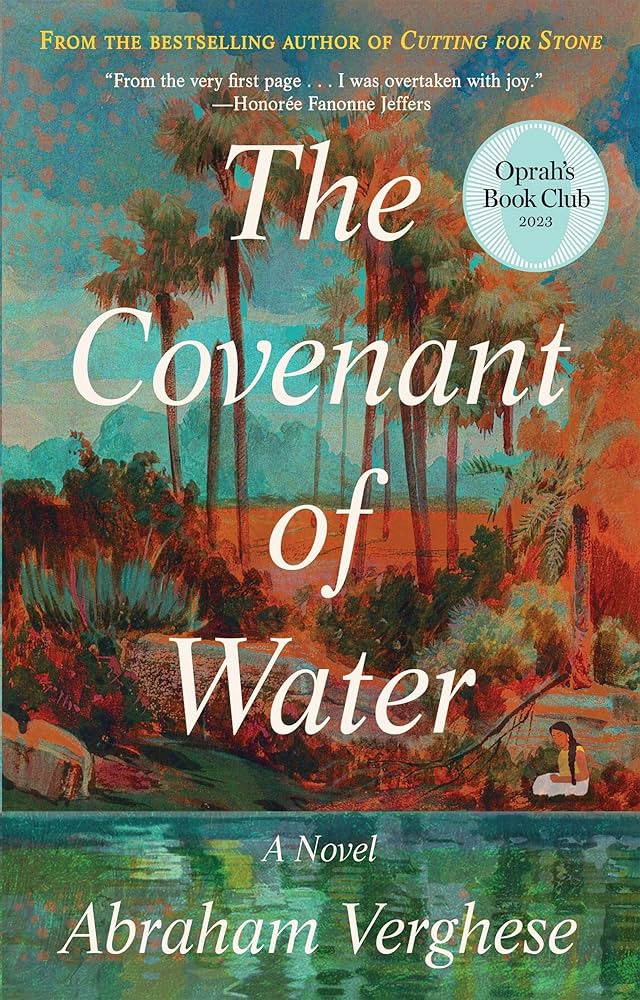
Abraham Verghese’s The Covenant of Water is a sweeping, multi-generational saga that establishes itself as a modern literary masterpiece. Spanning from 1900 to 1977, this novel is a profound exploration of family, faith, love, and the inescapable currents of history, all set against the stunning backdrop of Kerala, India. Verghese, a physician by trade, weaves a narrative with the precision of a surgeon and the compassion of a healer, crafting a story that is both epic in scope and intimately human.
A Multi-Generational Chronicle
The story begins with a twelve-year-old girl, the future Big Ammachi, journeying to her arranged marriage on the family estate known as Parambil. What unfolds is the chronicle of three generations of this family, bound not only by blood but by a mysterious “condition” that causes at least one member in each generation to die by drowning. This inexplicable tragedy becomes the central enigma of their lives, a looming shadow that shapes their decisions and defines their fate. As the narrative progresses, it introduces a cast of unforgettable characters whose lives intertwine with the family at Parambil—from the Scottish doctor Digby Kilgour, whose own search for purpose leads him to Kerala, to the family’s servant, whose loyalty and wisdom are a quiet force in their lives.
The Precision of a Surgeon’s Prose
Verghese’s prose is nothing short of magnificent. He possesses a remarkable ability to build a world that is so vivid and tangible you can almost feel the humidity of the monsoon rains and smell the lush spices of the land. His background in medicine shines through, providing an unblinking, yet tender, look at the human body and mind. He handles themes of disease, suffering, and healing with a rare blend of scientific detail and philosophical wonder. This duality is central to the novel, as he masterfully juxtaposes the rational world of medicine with the deep-seated faith and spiritual beliefs of his characters.
A Powerful and Pervasive Metaphor
The titular “Covenant of Water” serves as a powerful and pervasive metaphor throughout the book. Water is the source of life and nourishment in Kerala, but it is also the agent of death and fear for the family. It represents the binding force of their lives—the literal canals and rivers connecting their communities—and the tragic covenant they are forced to endure. The novel’s grandest triumph lies in its ability to show how these individual stories, like tributaries, flow together to form a larger river of history and human experience.
A Captivating and Profound Work
The Covenant of Water is a novel of immense heart and ambition. It is a testament to the enduring power of storytelling, a book that invites you to live within its pages for a while. Verghese tackles complex questions about destiny, forgiveness, and the legacy we leave behind, all while keeping the reader completely captivated. It is a profound, beautifully written, and deeply moving work that will stay with you long after you turn the final page. It is, without a doubt, a book that should be read and cherished.
About The Author