
The Calculus of Power: A Review of Kamala Harris’s 107 Days
⭐⭐⭐⭐ 4/5
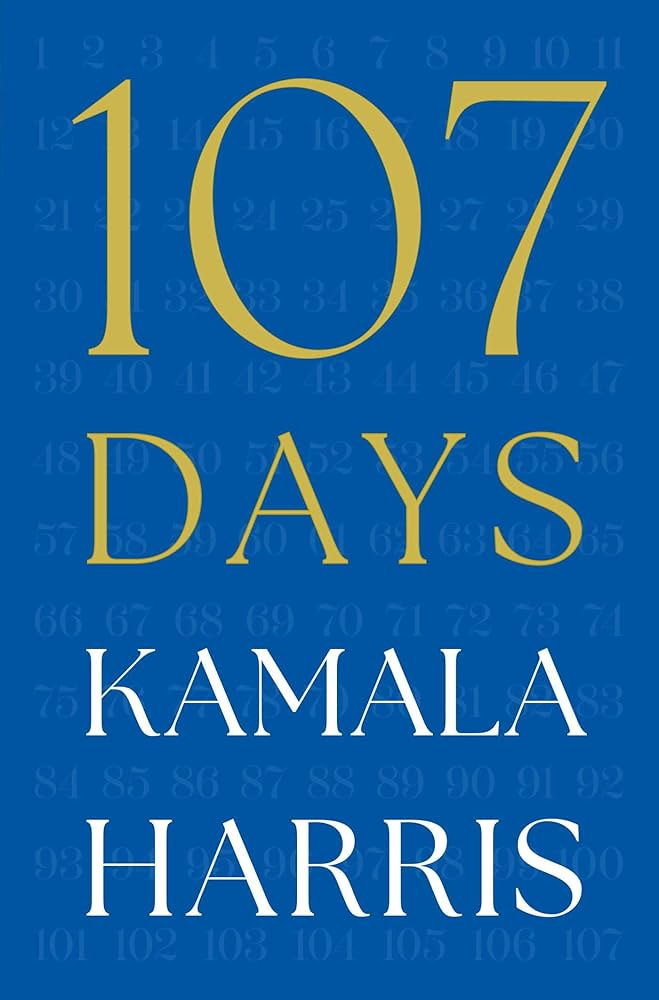
In 107 Days: A Memoir, Kamala Harris offers a tightly focused, high-stakes chronicle of a pivotal period in her political life. Eschewing the sweeping scope of a full autobiography, the book instead drills down into a consequential 15-week stretch, providing readers with a judicious, often candid, assessment of the legislative and political challenges that define modern governance. The resulting narrative is less a memoir in the traditional sense and more an immediate field report from the center of power, making it essential reading for anyone seeking insight into the mechanics of contemporary American politics.
Directness and the Discipline of Policy
Harris’s prose is direct and intentional, reflecting the legal and political rigor that defines her public career. She successfully navigates the complex terrain of policy without becoming overly mired in partisan rhetoric, choosing instead to illuminate the high-stakes negotiations and ethical compromises inherent in lawmaking. The thematic core of the book revolves around the tension between strategic political necessity and principled public service. For instance, her detailed recount of the efforts to pass key reforms (whether judicial, economic, or environmental) provides valuable context often lost in headline coverage. This specificity is the book’s greatest strength, transforming abstract policy battles into human dramas played out within the halls of Congress.
Accessing the Decision-Making Core
What sets 107 Days apart from other political literature is its intimacy—not in terms of personal anecdotes, which are sparse, but in the access it grants to the author’s decision-making process. Harris excels at revealing the calculus behind her policy stances, detailing the competing demands of constituents, colleagues, and core values. This approach lends the book a powerful sense of authenticity, particularly when discussing the weight of decisions that affect millions of lives. She is particularly effective when analyzing the critical role of data and strategic communication in shifting political momentum, showcasing her transition from a focus on legal precedent to the broader, often messier, art of national coalition-building.
The Constraint of a Compressed Focus
However, the book’s compressed focus is also its limiting factor. While the 107-day period is intensely covered, the narrative occasionally sacrifices broader context and deeper personal reflection for political expediency. Critical readers may find themselves wishing for more vulnerable, behind-the-scenes accounts of failure or doubt, which would have added a layer of literary depth to the otherwise authoritative political analysis. At times, the memoir leans slightly towards the measured, official narrative, carefully curating its content to serve the long-term political positioning of its author.
Ultimately, 107 Days is a significant contribution to the genre of modern political leadership and a mandatory read for political science students, policy wonks, and citizens invested in understanding the day-to-day pressure of the nation’s highest offices. It may not satisfy those seeking an emotionally resonant personal story, but it succeeds masterfully as a clear, intelligent, and highly informed examination of the political efficacy required to navigate a period of intense national challenge.
About The Author