
Stop Sabotaging Your Decisions: A Review of The Art of Thinking Clearly
⭐️⭐️⭐️⭐️ 4/5
The Philosophy of Cognitive Subtraction
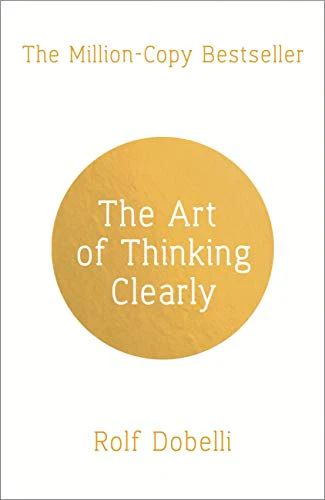
Rolf Dobelli’s The Art of Thinking Clearly is not a guide to achieving flawless logic, but rather a compelling, meticulously organized handbook on avoiding the most common pitfalls of human reasoning. With a clear focus on actionable psychology and behavioral economics, Dobelli takes aim at the pervasive cognitive biases that undermine our judgment in everything from business strategy and investment decisions to daily life choices. The book’s core premise is simple yet profound: improving your thinking is less about adding new knowledge and more about subtracting errors. By identifying and neutralizing the 92 specific mental mistakes outlined within, the reader is promised a clearer path to rational decision-making.
Structure and Accessibility: 92 Bite-Sized Biases
The genius of Dobelli’s approach lies in its structure. The book is divided into 92 concise, self-contained chapters, each dedicated to a single bias, a format ideally suited for both deep reading and quick reference. The author meticulously dissects concepts such as the Swimmer’s Body Illusion (confusing selection factors with results), the Sunk Cost Fallacy (clinging to a bad investment because of past effort), and Confirmation Bias (selectively interpreting new information to support existing beliefs). These chapters are brief, typically only two to three pages, employing vivid anecdotes, historical context, and relatable everyday examples to illustrate complex psychological phenomena. This literary discipline prevents the text from becoming overly academic, ensuring that heavy concepts, like the Availability Bias or Survivorship Bias, are immediately graspable and memorable.
An Assertive and Practical Tone
Dobelli, a journalist and former businessman, writes with an assertive, provocative style that demands the reader’s attention. He frames these biases not as esoteric errors, but as dangerous, costly flaws that actively sabotage personal and professional success. His tone is intentionally absolute, cutting through the common excuses for poor judgment. For instance, he doesn’t merely explain the reasons we overvalue the things we own (the Endowment Effect); he firmly advises us to “treat our possessions like museum items, don’t bond with them.” This authoritative voice is highly effective; it transforms the book from a theoretical overview into a practical manual, positioning the reader as an active participant in their own cognitive defense.
Minor Critique and Overload Risk
However, the sheer volume of biases presented can occasionally lead to a sense of intellectual fatigue. While the brevity of each chapter is a strength, reading the book cover-to-cover can feel overwhelming, as the distinctions between related biases sometimes blur. Furthermore, Dobelli’s definitive prescriptions occasionally oversimplify the role of emotion and intuition in certain decision domains. While he compellingly argues for cold, hard rationality, life often requires a balance that accounts for unpredictable human elements. These minor criticisms, however, do little to detract from the overall value of the work.
Conclusion: An Essential Mental Checklist
In conclusion, The Art of Thinking Clearly serves as an indispensable “idiot-proofing” guide for the modern era. It is essential reading for anyone engaged in high-stakes fields like finance, management, or engineering, and equally valuable for the average individual seeking to reduce self-sabotage. Dobelli successfully provides a powerful mental checklist, equipping readers with the diagnostic tools necessary to pause, scrutinize, and ultimately sidestep the psychological traps that plague everyday life. It is a book that demands to be kept within arm’s reach, encouraging its readers to become lifelong students in the art of sound judgment.
About The Author