
North Korean Soldier Defects Across DMZ in Rare Breach of Heavily Fortified Border
SEOUL – A North Korean soldier successfully defected to South Korea on Sunday, crossing the heavily fortified Demilitarized Zone (DMZ) in a rare and perilous incident that immediately drew the attention of regional security officials and underscored the volatile nature of the inter-Korean border.
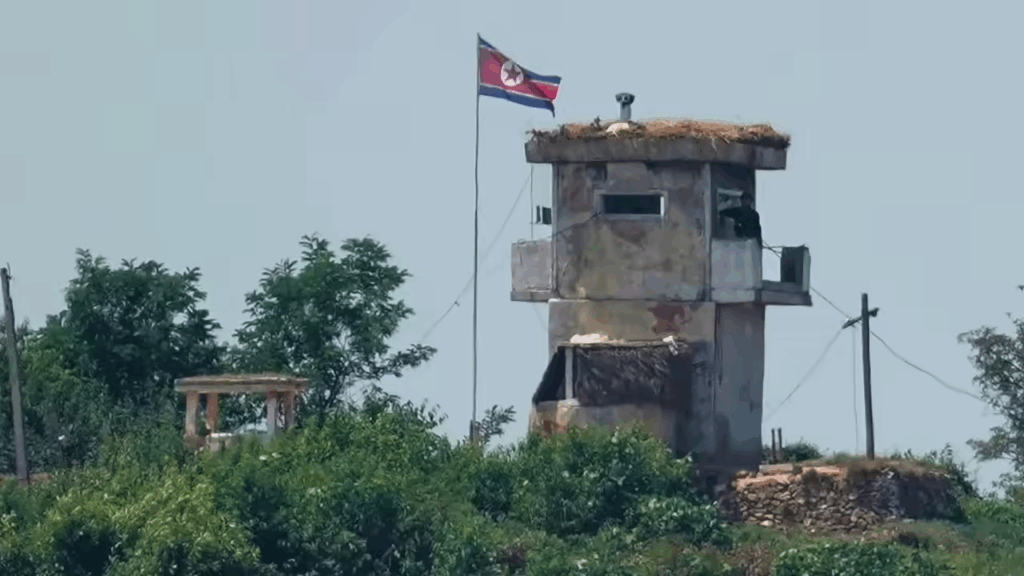
South Korea’s Joint Chiefs of Staff (JCS) confirmed the defection, stating that military personnel secured custody of the individual in the central section of the land border. The soldier reportedly expressed a clear intention to resettle in the South.
“Our military identified and tracked the individual near the Military Demarcation Line (MDL), conducted a standard guidance operation, and secured the custody,” the JCS said in a statement. Relevant authorities, including intelligence and military bodies, have initiated a thorough investigation to confirm the soldier’s identity, rank, and the precise circumstances and motivations behind the crossing.
A Crossing of Exceptional Risk
Defections across the DMZ are exceedingly rare due to the formidable military and physical obstacles. The 248-kilometer-long, 4-kilometer-wide strip is one of the world’s most militarized frontiers, bristling with landmines, tank traps, razor-wire fences, and constant surveillance from armed troops on both sides.
The incident is the first reported defection by a North Korean soldier across the land border since August 2024. Most of the over 34,000 North Koreans who have fled to the South since the 1950–53 Korean War have done so by crossing into China and then traveling through a third country. A direct crossing of the DMZ, especially by an active military member, suggests either detailed familiarity with the terrain or a desperate, high-risk attempt for freedom.
The successful crossing, which appears to have involved no immediate exchange of fire from North Korean border guards, stands in contrast to the highly publicized 2017 defection, where a North Korean soldier was shot multiple times by his own comrades as he sprinted across the border.
Geopolitical Implications
The defection comes at a time of strained inter-Korean relations. Though South Korean President Lee Jae Myung, who took office in June, has advocated for a more moderate, “dovish” approach aimed at restoring dialogue, Pyongyang has consistently rejected such overtures.
Analysts suggest the defection is likely to be met with anger in Pyongyang. The soldier, particularly one familiar with the DMZ’s central sector, could potentially provide South Korean intelligence agencies with valuable information on North Korean troop deployments, border security operations, and internal conditions within the military.
The defector will now undergo the standard, lengthy screening process conducted by South Korean intelligence to verify his identity and ascertain whether he is an authentic defector or a potential infiltrator. For the soldier, the capture marks the end of a perilous journey and the start of a difficult resettlement process into the capitalist society of South Korea.
About The Author