
Haiti Plunges Deeper into Crisis as State of Emergency Declared Amid Surging Gang Violence
Escalating Instability Grips Nation
PORT-AU-PRINCE, Haiti – Haiti’s government has declared a three-month state of emergency across several key departments, including West, Centre, and Artibonite, as a relentless surge in gang violence pushes the nation further into a humanitarian catastrophe. The drastic measure, announced on August 9, aims to “continue the fight against insecurity and respond to the agricultural and food crisis,” according to a government statement. This declaration underscores the dire reality gripping Haiti, where armed groups are expanding their territorial control and inflicting widespread terror.
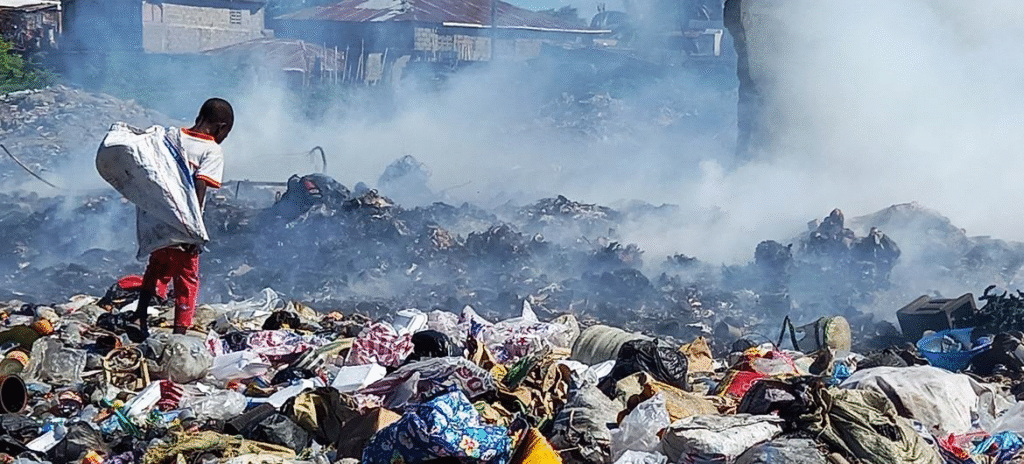
A Nation Under Siege
The current crisis is a profound escalation of long-standing instability, significantly worsened since the assassination of President Jovenel Moïse in July 2021. Powerful armed groups, often with ties to political and business elites, have capitalized on the ensuing power vacuum. Port-au-Prince, the capital, remains the epicenter, with estimates suggesting gangs control up to 90% of the city. However, the violence has tragically spread beyond the capital, engulfing previously quieter regions like Artibonite—known as Haiti’s “rice basket”—and Centre departments.
Between October 2024 and June 2025 alone, the United Nations human rights office reports nearly 5,000 people were killed, with over 1,000 killed and 620 kidnapped in Artibonite and Centre departments. The violence has forced a staggering 1.3 million Haitians to flee their homes, marking the largest displacement due to political upheaval in the country’s history, according to the International Organization for Migration (IOM). These internally displaced persons (IDPs) often find themselves in overcrowded, unsanitary makeshift sites or straining the resources of host families.
Humanitarian Crisis Deepens
The humanitarian impact is profound and multifaceted. Basic services are severely disrupted, with healthcare facilities and schools forced to close. Food insecurity has reached critical levels, affecting over half of Haiti’s population—approximately 5.7 million people. Gangs extort farmers, control trade routes, and disrupt food distribution, pushing hundreds of thousands further into destitution. The UN Children’s Fund (UNICEF) reported that only 17% of the 129,000 children projected to need lifesaving treatment for acute malnutrition this year have received it.
Sexual and gender-based violence, including gang rape and sexual slavery, is rampant, particularly in displacement sites, disproportionately affecting women and girls. “Haitians are suffering horrific abuses,” stated Nathalye Cotrino, a senior Americas researcher for Human Rights Watch.
Challenging Path to Stability
Efforts to restore order have been largely insufficient. The UN-backed Multinational Security Support (MSS) mission, led by Kenyan police officers, has launched operations but struggles to maintain a lasting presence against the well-armed and organized gangs. The Haitian National Police remain severely underfunded.
In a recent development, Andre Jonas Vladimir Paraison was appointed interim director of Haiti’s National Police, vowing to “provide security across every corner of the country.” Concurrently, Laurent Saint-Cyr, a wealthy businessman, has taken over as president of the Transitional Presidential Council, tasked with holding elections by February 2026.
Despite these leadership changes and international calls for increased support, the situation remains precarious. The ongoing insecurity also complicates the response to natural disasters, with Haiti facing the start of its cyclonic season and grappling with the aftermath of recent floods and earthquakes.
The declaration of a state of emergency is a stark acknowledgment of the government’s struggle to regain control. As the crisis deepens, the international community faces an urgent call to provide not just humanitarian aid, but also robust, sustained support for security and long-term stability in a nation teetering on the brink.
About The Author