
Global Trade at a Crossroads: India-US Deal and Canada’s Digital Tax Reversal
The world of international trade is a complex web of negotiations, tariffs, and strategic maneuvers, where economic interests often intertwine with broader geopolitical objectives. Recent developments involving India, the United States, and Canada highlight this intricate dance, showcasing both the pressures driving bilateral agreements and the concessions countries are willing to make to foster economic cooperation. With a looming tariff deadline for India and a decisive move by Canada to restart trade talks, these events underscore the dynamic and often fraught nature of global commerce in 2025.
India and the US: Racing Against the Tariff Clock
India and the United States are on the cusp of finalizing an interim trade deal, a crucial step as a significant tariff deadline approaches. This agreement is particularly vital for India, which faces the potential re-imposition of a 26% reciprocal tariff on its goods by the US, originally announced by the Trump administration. The current negotiations, led by India’s chief negotiator Rajesh Agrawal, have seen Indian officials extend their stay in Washington, underscoring the urgency to seal the deal before July 9, when these punitive levies are set to take effect.
The talks are multifaceted, aiming for a multi-sectoral, comprehensive first tranche of a Bilateral Trade Agreement (BTA) by October 2025, with an ambitious target of reaching $500 billion in bilateral trade by 2030. Key sectors under discussion include agriculture, automobiles, industrial goods, and labor-intensive products. However, agriculture and dairy remain contentious areas, with India reportedly holding firm on protecting its politically sensitive farm sector and the livelihoods of millions of small-scale farmers. The US, conversely, is seeking greater market access for its agricultural products, including apples, tree nuts, and genetically modified crops, as well as industrial goods and electric vehicles. Despite these challenges, both nations are pushing for a resolution to avoid further trade friction and solidify their economic partnership. India has also agreed to increase imports of US natural gas as part of efforts to reduce its trade surplus.
Canada’s Concession: Paving the Way for Renewed Dialogue
In a separate but equally significant development, Canada has opted to repeal its controversial Digital Services Tax (DST), a move directly aimed at unblocking stalled trade talks with the United States. This decision comes after intense pressure from the US, with President Trump having previously halted negotiations, labeling the tax as a “direct and blatant attack” on American tech companies. The DST, which would have imposed a 3% levy on revenue generated by large digital service providers from Canadian users, retroactively to 2022, was set to cost US tech giants like Amazon, Google, Meta, and Apple an estimated $2 billion.
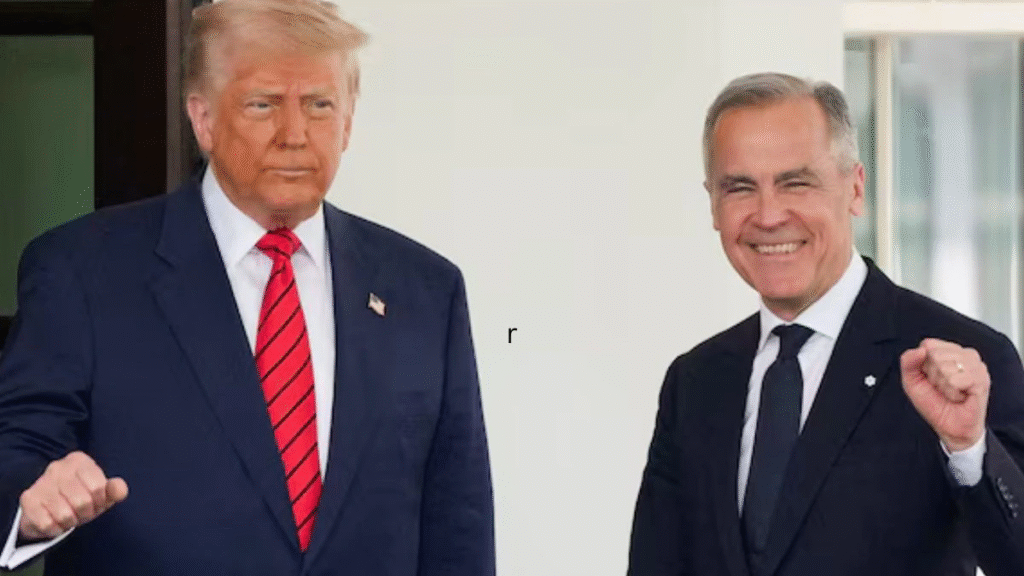
Canada’s decision to rescind the DST, just hours before it was due to take effect, demonstrates a strategic concession designed to restart crucial bilateral trade discussions. Canadian Prime Minister Mark Carney and President Trump have agreed to resume negotiations, targeting a new economic and security relationship by July 21, 2025. This move is seen as a significant win for the Trump administration and US tech firms, as it averts substantial financial liabilities and potential retaliatory tariffs on Canadian goods. While Canada initially introduced the DST to ensure fair taxation of large technology companies operating in the country, its preference remains a multilateral agreement on digital services taxation, aligning with broader international efforts at the OECD. The repeal signals Canada’s prioritizing of a comprehensive trade arrangement with its largest trading partner, recognizing the immense value of unobstructed economic ties.
The Broader Implications for Global Trade
These two distinct, yet interconnected, trade narratives underscore a broader trend in global commerce: the increasing pressure for bilateral agreements in a landscape marked by protectionist tendencies and a desire to redefine economic relationships. Interim deals, while offering immediate relief from tariffs and allowing for the resumption of talks, often defer the most difficult issues to future, more comprehensive negotiations. This approach can provide much-needed stability and predictability in the short term, but also prolongs uncertainty surrounding sensitive sectors.
The US’s assertive stance on trade, particularly under the current administration, indicates a preference for direct negotiations and the leveraging of tariffs to achieve desired outcomes. For countries like India and Canada, navigating this environment requires a delicate balance between protecting domestic interests and securing access to the vital US market. The resolution of these trade disputes, even in their interim forms, has wider implications, potentially influencing other nations facing similar challenges with the US and shaping the future architecture of international trade. As global economies continue to grapple with shifting power dynamics and technological advancements, the ability to forge and maintain stable trade relationships will remain paramount for economic growth and stability.
About The Author