COP28 in Final Week as World Leaders Grapple with Fossil Fuel Phase-Out and Climate Finance
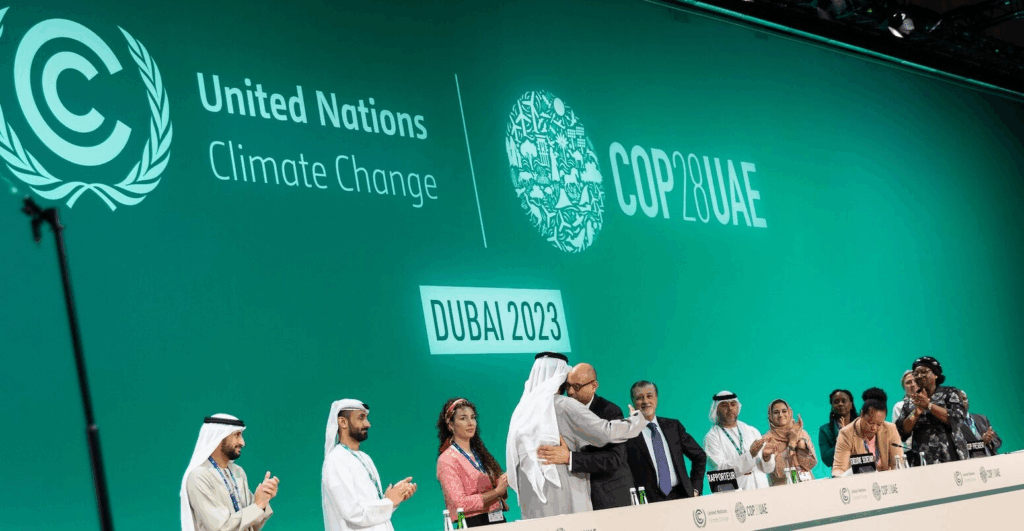
DUBAI — As the COP28 climate summit enters its final, critical week, delegates from nearly 200 nations are locked in tense negotiations, striving to reach a consensus on two of the most contentious issues: the phasing out of fossil fuels and the establishment of a new fund for climate-related loss and damage. While negotiators work behind closed doors, a powerful message for more urgent action is being amplified by thousands of protestors outside the venue.
The Fossil Fuel Dilemma
The debate over fossil fuels has emerged as the central battleground of this year’s summit.1 For the first time in the history of the Conference of the Parties (COP), a draft agreement explicitly mentions a “phase-out of fossil fuels.” This language, a red line for many oil-producing nations, represents a significant step forward for climate activists and vulnerable countries. The proposed text calls for a “just and equitable transition away from fossil fuels,” a compromise that seeks to accommodate the varying economic dependencies of different nations. However, major fossil fuel-producing states and some developing countries argue that such a commitment would hinder their economic growth and energy security. The discussions now revolve around whether the final text will retain this strong language or revert to softer, less binding terminology, such as “phasing down” or “reducing.”
The Fight for a Loss and Damage Fund
Simultaneously, negotiators are racing to finalize the operational details of a “loss and damage” fund, a groundbreaking mechanism designed to help developing nations cope with the irreversible impacts of climate change.2 This fund was provisionally agreed upon at last year’s COP, but the current summit is tasked with ironing out the crucial specifics: who will contribute to the fund, who will benefit, and how the money will be managed. Developing countries, which have historically contributed the least to global emissions, are demanding that the fund be a formal obligation for developed, high-emitting nations. Conversely, some developed countries are pushing for a broader donor base that includes wealthy emerging economies, citing a changing global economic landscape.
Protests Echo Demands for Action
Outside the negotiation halls, the sense of urgency is palpable. Environmental activists, Indigenous communities, and youth movements have been holding daily protests, calling for an immediate and complete phase-out of fossil fuels and robust financial commitments. These demonstrations, though organized in designated zones, serve as a constant reminder to delegates that the world is watching and expecting a definitive outcome. The protests highlight a key tension of the summit: the gap between the scientific consensus on climate change and the political will to enact the necessary, ambitious changes.
As the clock ticks down, the success of COP28 will hinge on the ability of all parties to bridge these deep divides. The final hours of the summit will determine whether world leaders can translate their rhetoric into concrete, actionable plans that address the most pressing issues of climate change.
About The Author