
Colombian Appeals Court Overturns Ex-President Uribe’s Conviction in Historic Tampering Case
BOGOTÁ, Colombia – An appeals court in Bogotá on Tuesday overturned the landmark conviction of former Colombian President Álvaro Uribe Vélez on charges of bribery and witness tampering, igniting a new wave of political polarization across the nation. The ruling reverses the August conviction that had sentenced the 73-year-old conservative strongman to 12 years of house arrest, making him the first former Colombian head of state to be criminally convicted.
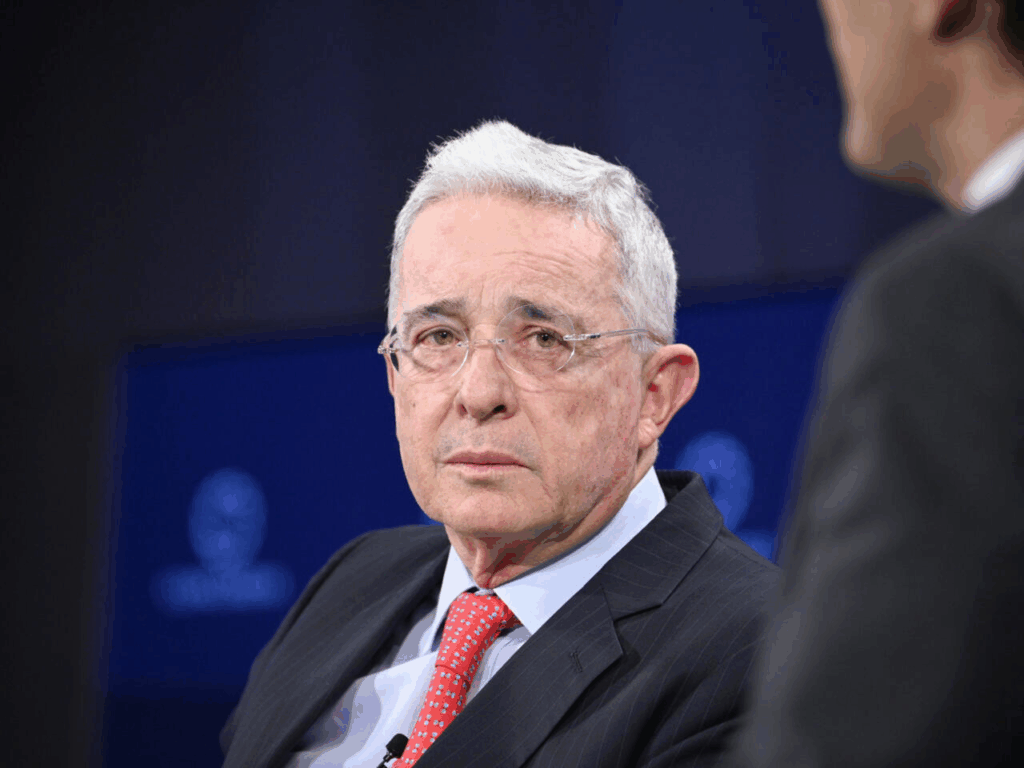
The decision by the three-judge appeals panel concluded that the initial conviction lacked sufficient legal proof to establish Uribe’s direct responsibility for instigating the crimes. Specifically, the court found the original ruling contained “structural deficiencies” and “methodological errors” in the evaluation of evidence.
The Core of the Case
The criminal case against Uribe originated in 2018, stemming from an investigation by the Supreme Court. The probe began after Uribe filed a libel suit against leftist Senator Iván Cepeda, whom Uribe accused of coercing witnesses to link him to paramilitary groups in the 1990s. In a dramatic twist, the Supreme Court dismissed Uribe’s suit and instead began investigating the former president, alleging he had pressured or bribed jailed former paramilitary members to retract or alter their testimony regarding his alleged ties to the groups.
The initial conviction in August 2025 rested on the evidence that Uribe, acting through his former lawyer, Diego Cadena, attempted to influence three witnesses.
Key Justifications for the Reversal
The appeals court’s acquittal hinged on several critical findings, including:
- Exclusion of Wiretaps: A key piece of evidence in the original trial—wiretapped conversations involving Uribe and Cadena—was deemed inadmissible. The appeals court determined these wiretaps were initiated illegally, as they began by mistake while another person was under investigation.
- Lack of Unequivocal Proof: The judges stated that the evidence failed to prove “beyond reasonable doubt” that Uribe directly instigated the crimes of bribery or procedural fraud. The court concluded that Uribe’s responsibility was not “unequivocally” proven.
- Inconsistencies in Testimony: The court noted inconsistencies and contradictions in the testimonies of the witnesses involved in the bribery claims.
Political Fallout and Future Appeals
The acquittal immediately drew strong reactions from across the political spectrum. Uribe and his supporters, who have long claimed the case was a political witch hunt designed to tarnish his legacy, celebrated the ruling as a vindication of his innocence. U.S. Secretary of State Marco Rubio was among those who publicly welcomed the reversal, saying “justice has prevailed.”
In contrast, opponents and victims’ representatives denounced the decision. Leftist President Gustavo Petro, a former rival, criticized the court’s decision to exclude the wiretaps, arguing that the ruling serves to “cover up the history of paramilitary governance in Colombia.” Senator Iván Cepeda and the victims’ lawyer have both announced plans to file an appeal, taking the highly contentious case to its final instance before Colombia’s Supreme Court of Justice (the cassation court).
The case against Álvaro Uribe remains one of the most polarizing legal battles in Colombian history, reflecting the deep divisions in a country still grappling with the legacy of its decades-long internal conflict and the relationship between justice and political power.
About The Author