Best of All Worlds: A Confined Humanity
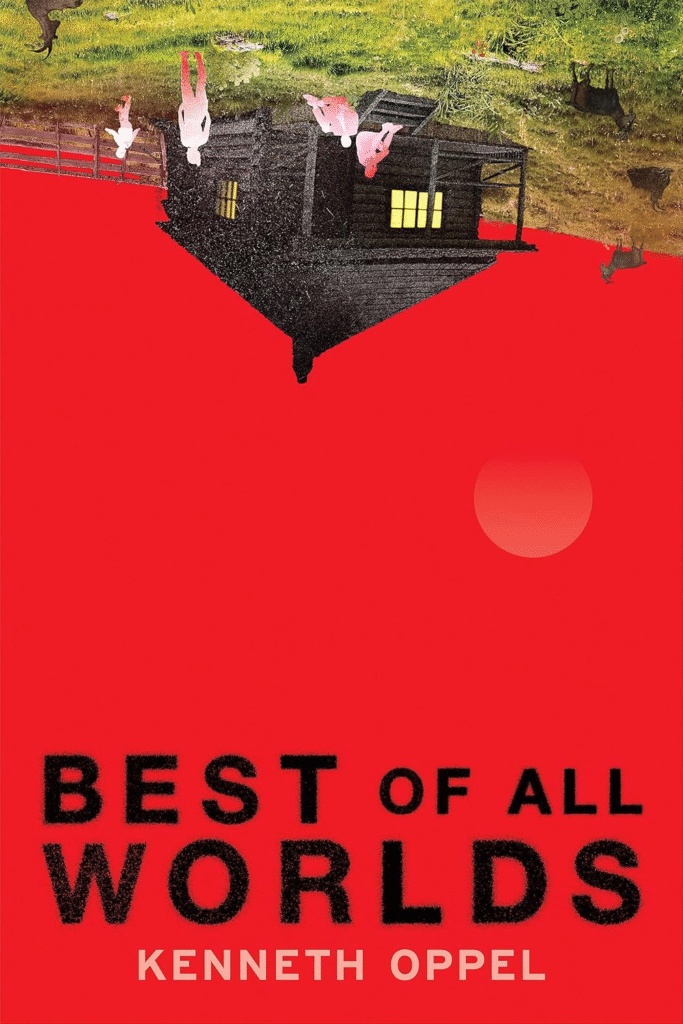
Kenneth Oppel’s Best of All Worlds is a thought-provoking and unsettling dive into themes of survival, conflicting ideologies, and the fragility of human connection when faced with unimaginable circumstances. At its core, the novel presents a chilling “what if” scenario, transforming a seemingly innocuous family vacation into a gripping exploration of isolation, adaptation, and the dangerous friction that arises when deeply held beliefs clash.
The Dome: A New Reality
The narrative thrusts readers into the disorienting reality of Xavier Oaks, a thirteen-year-old who wakes up one morning at a lakeside cottage to find the familiar landscape replaced by an enclosed farm, inexplicably trapped under a transparent dome. This immediate, jarring disruption of normalcy sets the stage for a compelling psychological thriller, forcing Xavier, his dad, and his pregnant stepmother, Nia, to confront an entirely new existence. Their initial shock gives way to a forced adaptation, as they learn to farm, raise livestock, and navigate their inexplicable captivity. Oppel masterfully portrays the subtle shifts in their lives, from the technological disconnect to the acceptance of their new, seemingly benevolent, overseers who provide for their basic needs.
Clash of Ideologies
The true tension, however, ignites three years into their isolation with the sudden arrival of another family, the Jacksons. This addition introduces a crucial dynamic, as the two families embody vastly different worldviews and coping mechanisms. The Oaks, having settled into a quiet, almost resigned acceptance, believe their predicament is due to alien abduction or a similar inexplicable force. In contrast, the Jacksons, particularly the fiery patriarch, Riley, cling to a fervent belief in government conspiracies and an unwavering determination to escape.
Oppel deftly uses this clash of perspectives to explore politically charged topics that resonate deeply with contemporary anxieties. The novel subtly, yet powerfully, addresses issues like climate change, pandemics, and the rise of conspiracy theories, often reflecting the polarized societal debates of our own “real world.” The Canadian Oaks’ measured pragmatism stands in stark contrast to the American Jacksons’ suspicion and aggressive pursuit of “truth,” forcing readers to question how they might react in similar extraordinary circumstances. The beauty of Oppel’s storytelling lies in his ability to present these conflicting viewpoints without overtly dictating a right or wrong answer, allowing the reader to sift through the evidence and form their own conclusions.
Coming of Age Under Duress
Beyond the societal commentary, Best of All Worlds is also a compelling coming-of-age story for Xavier. Trapped in the dome, he experiences an accelerated journey into adulthood, witnessing the best and worst of human nature. His longing for his previous life, his struggles with loneliness, and his burgeoning feelings for Mackenzie, the Jackson daughter, add a layer of emotional depth to the survival narrative. The personal relationships within the dome, both familial and budding romantic, are put under immense strain, highlighting how easily trust can erode and how desperate choices can lead to devastating consequences.
A Lingering Reflection
Ultimately, Best of All Worlds is a testament to Kenneth Oppel’s skill as a storyteller. He crafts a narrative that is both gripping and profoundly thought-provoking, leaving readers with a lingering sense of unease and a multitude of questions long after the final page. It’s a book that invites discussion, debate, and introspection, reminding us that even in the most confined spaces, the human spirit continues to grapple with fundamental questions of freedom, belief, and what truly constitutes “the best of all worlds.”
About The Author