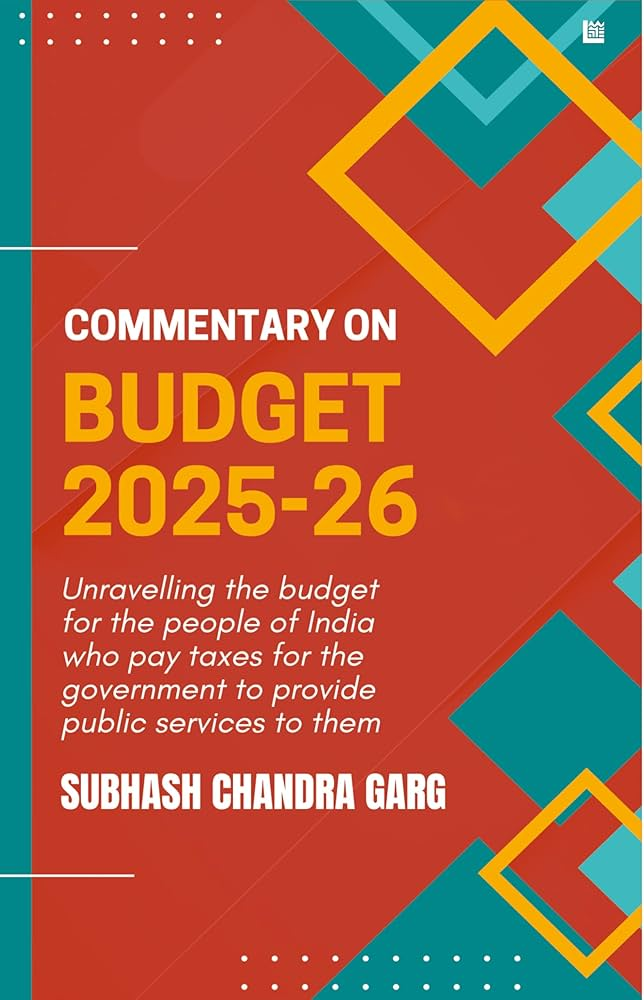
An In-depth Review of Subhash Chandra Garg’s Commentary on Budget 2025-26
⭐⭐⭐⭐⭐ 5/5
An Unparalleled Dissection of India’s Economic Blueprint
In the intricate world of Indian public finance, the annual Union Budget is a document of immense importance, but its complexity can often be a barrier to understanding. Subhash Chandra Garg, a former Finance and Economic Affairs Secretary to the Government of India and a veteran of the World Bank, steps in to demystify this critical policy document with his latest work, Commentary on Budget 2025-26. Far from a dry, academic treatise, this book is an essential, incisive, and remarkably accessible guide to the government’s economic blueprint, solidifying its place as the definitive resource for anyone seeking to truly comprehend the budget’s implications.
Beyond the Numbers: Context and Analysis
Garg’s commentary excels by transcending a simple summary of figures and proposals. He masterfully places the Budget 2025-26—with its focus on key themes like driving consumption through personal income tax cuts (raising the no-tax threshold to ₹12 lakh), bolstering infrastructure via an ambitious Asset Monetization Plan, and fostering innovation through new funds for startups and deep tech—within its broader macroeconomic context. He doesn’t just explain what the budget says; he analyzes why it says it, examining the government’s strategic intentions and the potential real-world impact of its policies on individuals, industries, and the nation as a whole. This deep-dive approach is what distinguishes the book, providing readers with the tools to form their own informed opinions rather than simply accepting a pre-digested view.
A Resource for All: From Experts to Citizens
The book’s strength lies in its ability to cater to a diverse audience. For policy analysts, economists, and public service aspirants, Garg’s meticulous deconstruction of tax reforms, expenditure allocations (such as for the PM Dhan-Dhaanya Krishi Yojana and the expansion of medical education), and fiscal strategy offers an invaluable professional-grade resource. His analysis of the government’s push for a “Viksit Bharat” by 2047 and the specific reforms in areas like FDI in the insurance sector and regulatory simplifications for MSMEs provides a comprehensive overview of the government’s long-term vision. Simultaneously, for the concerned citizen or business owner, Garg’s clear prose and logical organization make daunting topics like customs rationalization and capital gains taxes comprehensible. He skillfully translates complex jargon into plain English, ensuring that the critical dialogue around the budget is not confined to an elite few.
A Balanced and Trustworthy Perspective
A particularly commendable aspect is Garg’s balanced perspective. He neither blindly praises nor unfairly criticizes the government’s proposals. Instead, he offers a pragmatic, objective assessment, highlighting both the potential benefits and the inherent challenges. For instance, while acknowledging the boost to consumption from tax cuts, he also explores the fiscal prudence required to manage the overall budget deficit. This thoughtful, non-partisan approach lends the book immense credibility and makes it a trustworthy source of information.
The Verdict: An Indispensable Guide
In conclusion, Commentary on Budget 2025-26 is a stellar accomplishment. It is not merely a book; it is a vital public service, providing a clear, comprehensive, and critical lens through which to view one of the most important policy documents of the year. Subhash Chandra Garg’s unparalleled experience and analytical rigor shine on every page, making this book an indispensable tool. For its depth of insight, accessibility, and authoritative commentary, it fully deserves a perfect 5/5 rating.
About The Author