A Masterclass in Fiscal Analysis: A Professional Review of Explanation and Commentary on Budget 2023-2024 by Subhash Chandra Garg
5/5 ⭐⭐⭐⭐⭐
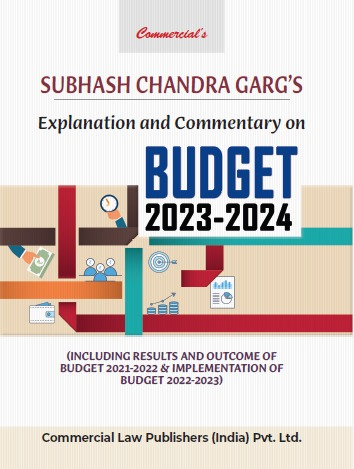
In the dense and often convoluted world of public finance, a clear and authoritative voice is a rare and invaluable asset. Subhash Chandra Garg, a former Finance and Economic Affairs Secretary to the Government of India, offers just such a voice in his comprehensive work, Explanation and Commentary on Budget 2023-2024. Far from a mere rehash of the budget speech, this book stands as a rigorous and insightful dissection of the financial document, providing an indispensable resource for anyone seeking to understand the real-world implications of India’s fiscal policy.
An Unparalleled Perspective from a Practitioner
Garg’s expertise is the cornerstone of this book’s success. With decades of experience at the highest levels of government, he possesses an unparalleled insider’s perspective on the complexities of budget formulation and implementation. This is not simply an academic’s analysis; it is a practitioner’s commentary, grounded in a deep understanding of the machinery of state. The book’s structured approach, breaking down the budget into its constituent parts—from receipts and expenditures to fiscal deficit and debt—demystifies the numbers and jargon that typically overwhelm non-specialists. He goes beyond the headline figures, exploring the nuances of tax policies, capital expenditures, and the government’s approach to key macroeconomic variables.
A Structured and Comprehensive Analysis
The commentary is organized into four distinct parts, a structure that effectively guides the reader through a logical progression of thought. It begins with the “big budget numbers,” providing a foundational overview of the fiscal landscape. It then moves to a retrospective analysis, examining the results and outcomes of the previous year’s budget (2022-23) to establish a context of continuity and performance. This is a critical feature, as it allows readers to evaluate the 2023-24 budget not in isolation, but as a component of a longer-term policy trajectory. The third part offers a serious look at the implementation of the 2023-24 budget, an area often neglected in popular commentary. Finally, the book delivers a critical analysis of the proposals and their implications, offering a balanced and expert perspective.
Connecting Policy to Macroeconomic Impact
What sets this book apart is its commitment to detailed analysis and its ability to connect policy decisions to their macroeconomic impacts. Garg’s commentary sheds light on key concepts such as the distinction between “voted” and “charged” expenditures, the role of public sector undertakings in capital expenditure, and the evolving dynamics of taxation. He provides a framework for rating the budget, a unique feature that brings a welcome sense of objectivity and discipline to an otherwise subjective discussion. While the book is rich in data and numbers, Garg’s commentary transforms these figures from dry statistics into a narrative of economic strategy and its potential effects on growth, employment, and poverty.
An Essential Guide for a Diverse Audience
This book is an essential read for a diverse audience, from students of economics and public policy to financial professionals, journalists, and anyone with a vested interest in India’s economic health. Its greatest strength lies in its ability to offer a sophisticated, yet accessible, explanation of the Union Budget, making it an invaluable tool for understanding one of the most important annual documents shaping the country’s future. It is a work of exceptional clarity, rigor, and authority, deserving of its place as a definitive guide to the Budget 2023-2024.
About The Author