
Israel Halts Rafah Crossing Reopening, Linking Access to Hostage Remains
JERUSALEM/GAZA STRIP – The fragile ceasefire between Israel and Hamas faced a critical challenge over the weekend after the Israeli Prime Prime Minister’s Office (PMO) announced late Saturday that the Rafah border crossing with Egypt would remain closed “until further notice.” The decision directly contradicted an earlier statement by the Palestinian Embassy in Cairo that had signaled the vital humanitarian and civilian artery would reopen on Monday.
The PMO explicitly linked the crossing’s reopening to Hamas fulfilling its commitments under the recently brokered truce, specifically demanding the full return of the remains of deceased Israeli hostages.
Contradictory Announcements Stoke Tensions
The dramatic back-and-forth began Saturday morning when the Palestinian Embassy in Cairo declared that, following coordination with Egyptian authorities, the Rafah crossing would resume operations on October 20 to allow Palestinian citizens residing in Egypt to return to Gaza. Rafah is Gaza’s only gateway to the outside world not directly controlled by Israel, making its status politically and logistically paramount.
However, the Prime Minister Benjamin Netanyahu’s office quickly nullified the plan, stating: “Its opening will be under consideration in accordance with the manner in which Hamas implements its part in return of the deceased hostages and implementation of the agreed upon framework.”
As of the latest reports, Hamas has handed over the bodies of 12 of the 28 deceased Israeli hostages believed to be in Gaza, with the slow pace creating severe anxiety among Israeli families and straining the truce deal. Hamas has countered, saying that the extensive destruction across the territory and the presence of unexploded ordnance under the rubble are actively hampering retrieval efforts, claiming the continued closure of Rafah itself prevents the entry of specialized search equipment.
Humanitarian Crisis Deepens
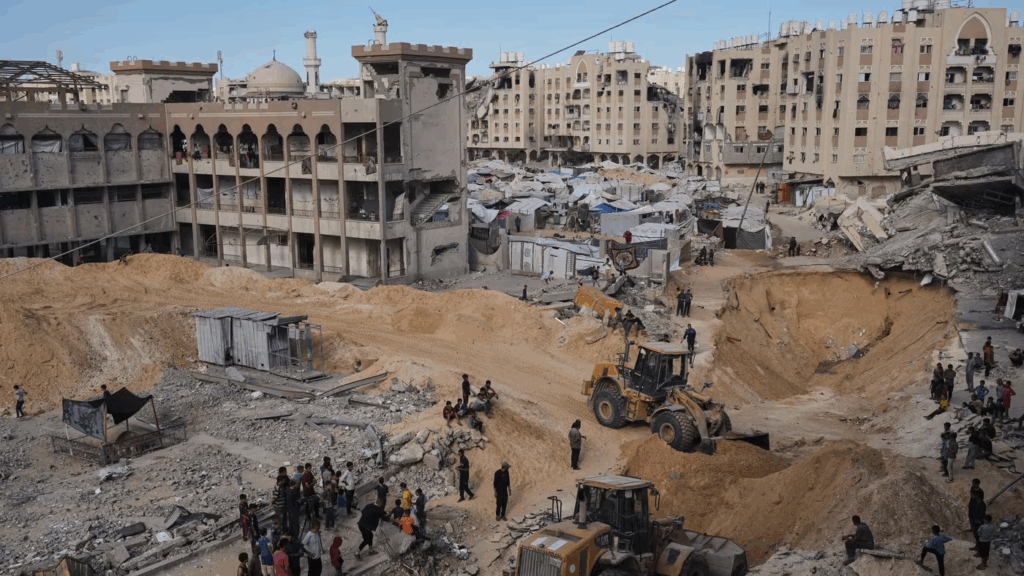
The sustained closure of the crossing, which Israel took military control of in May 2024, exacerbates the catastrophic humanitarian situation inside the Gaza Strip. The crossing is essential for the movement of civilians, including medical patients requiring urgent evacuation, and for the necessary surge of aid.
While the ceasefire agreement included provisions for a dramatic increase in humanitarian assistance, United Nations agencies and aid organizations continue to report that that the volume of food, medicine, and shelter materials entering Gaza—primarily through the Kerem Shalom crossing—remains far below the scale of need. According to the UN World Food Programme, daily food deliveries remain a fraction of what is required for the territory’s approximately 2.2 million residents.
Blame-Trading Undermines Truce
The current standoff is raising serious concerns about the stability of the US-brokered ceasefire agreement. Hamas immediately denounced Israel’s decision to keep Rafah closed as a “blatant violation” and a “repudiation” of the commitments made to international mediators.
Meanwhile, the United States State Department weighed in late Saturday, stating it had received “credible reports indicating an imminent ceasefire violation by Hamas against the people of Gaza,” a claim Hamas vehemently denied, calling it a repetition of a “misleading narrative.”
The dispute over the return of bodies and the flow of aid underscores the extreme fragility of the truce. The Rafah crossing, once a symbol of limited connection for Gazans, has now become a critical flashpoint, its status a direct measure of trust—or the lack thereof, between the warring parties and a major obstacle to any lasting political resolution.
About The Author