
UN General Assembly: Pakistan Accuses India of ‘Act of War’ Over Indus Water Treaty
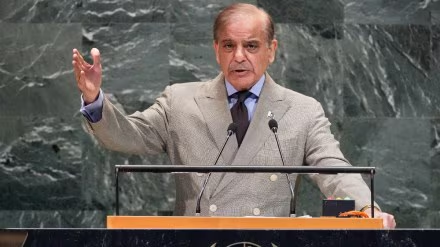
New York, USA – In a dramatic address to the United Nations General Assembly, Pakistan’s Prime Minister Shehbaz Sharif has intensified the long-standing dispute with India, calling the unilateral suspension of the Indus Water Treaty a direct “act of war.” His remarks have sparked a sharp rebuttal from India, further escalating tensions between the two nuclear-armed neighbours.
The Abeyance of the Treaty
Mr. Sharif, speaking from the UN podium on Friday, accused India of a “unilateral and illegal attempt” to violate the 1960 Indus Water Treaty, which governs the sharing of six rivers between the two countries. The Prime Minister stated that any breach of the treaty represents an act of war and that Pakistan will “defend the inseparable right of our people on these waters.”
The move by India to put the treaty in abeyance follows a deadly terror attack in Pahalgam, Jammu and Kashmir, on April 22, which killed 26 civilians. India has consistently linked the reinstatement of the treaty to a “verifiable cessation of cross-border terrorism” by Pakistan. According to New Delhi, the suspension of the treaty’s mechanisms is a sovereign right exercised under international law in response to the security threat.
India’s Response
India’s diplomat at the UN, Petal Gahlot, quickly exercised the right of reply, dismissing Mr. Sharif’s speech as “absurd theatrics.” She accused Pakistan of “glorifying terrorism” and pointed out that Islamabad had shielded a terror group responsible for the Pahalgam attack at the UN Security Council just days after the incident.
Gahlot’s strong rebuke included a reminder that Pakistan had harbored Osama bin Laden for a decade. She further asserted that India and Pakistan have agreed to bilaterally address any outstanding issues and that there is no place for third-party intervention. The Indian response made it clear that New Delhi would not distinguish between terrorists and their sponsors and would not be cowed by what it called “nuclear blackmail.”
Historical Context and Future Implications
The Indus Water Treaty, brokered by the World Bank, has long been considered one of the most successful water-sharing agreements globally, having survived multiple wars and periods of strained relations. Under the pact, India was granted exclusive use of the eastern rivers (Ravi, Beas, and Sutlej), while Pakistan received control of the western rivers (Indus, Jhelum, and Chenab).
However, the treaty has faced increasing criticism, particularly in India, where some argue the water allocation is inequitable. With the treaty’s abeyance, India has been pushing forward with hydroelectric projects on the western rivers, such as the Sawalkote dam on the Chenab, which it had previously avoided. This latest diplomatic confrontation at the UN highlights the deep mistrust and simmering tensions that persist, with water resources now a central point of contention in an already volatile bilateral relationship.
About The Author