Ethereal Gaze: Soderbergh’s Hauntingly Intimate “Presence”
Rating: 4.5/5 Stars ⭐⭐⭐⭐✨
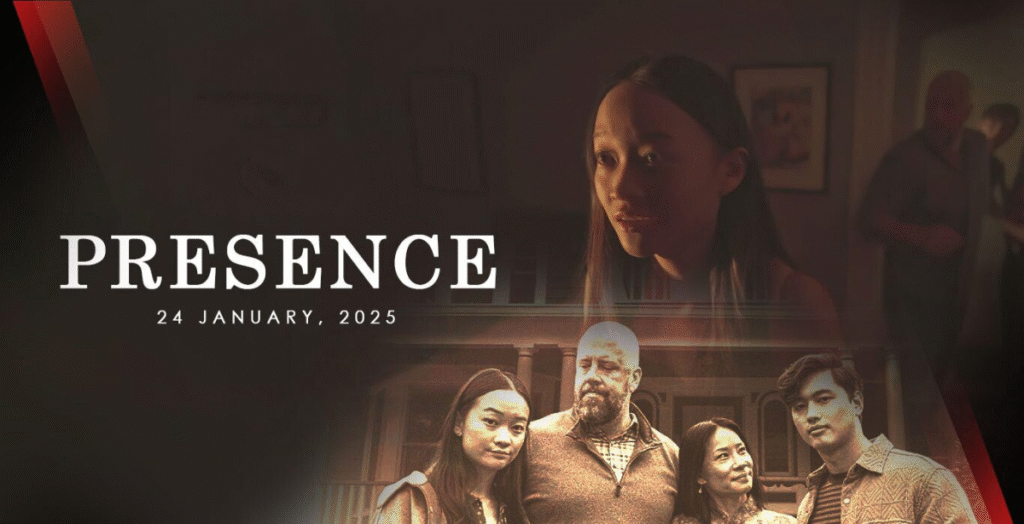
Steven Soderbergh’s latest cinematic offering, Presence, is a masterclass in minimalist storytelling and atmospheric tension, inviting viewers into a uniquely disembodied perspective. This review essay will delve into the film’s innovative narrative approach, Soderbergh’s signature directorial style, and the profound thematic questions it raises about observation, family, and the unseen forces that shape our lives.
The Unseen Observer
Presence is not merely a ghost story; it is a story from the ghost’s perspective. Steven Soderbergh, known for his experimental prowess, crafts a narrative that places the audience squarely in the shoes of an unseen entity observing a family’s unraveling. This innovative point of view, maintained with remarkable discipline throughout the film, transforms the viewing experience into one of voyeuristic intimacy. We witness secrets unfold, tensions simmer, and relationships fray, all through the silent, omnipresent gaze of a spectral witness. This narrative conceit is both unsettling and utterly captivating, forcing viewers to become passive participants in the domestic drama playing out before them.
Soderbergh’s Signature Subtlety
True to Soderbergh’s distinctive style, Presence thrives on subtlety and controlled pacing. The cinematography, often static and observational, reinforces the ghost’s fixed viewpoint, creating a sense of detached realism. There are no jump scares or overt supernatural theatrics; instead, the horror lies in the slow, creeping dread of unspoken truths and the erosion of trust within a seemingly normal family. The sound design is particularly effective, using ambient noises and hushed dialogue to build atmosphere and hint at the emotional undercurrents. Soderbergh’s direction is precise, allowing the performances to breathe and the intricate family dynamics to slowly reveal themselves, making the audience lean in closer to catch every whisper and glance.
A Deep Dive into Domesticity
Beyond its unique perspective, Presence is a poignant exploration of family dynamics, secrets, and the weight of the past. The film meticulously dissects the lives of its human characters, exposing their vulnerabilities, their deceptions, and their desperate attempts to maintain a façade of normalcy. The ghost, rather than being a malevolent force, becomes a silent mirror reflecting the hidden truths of the living. Themes of voyeurism, grief, and the lingering impact of past events are woven throughout the narrative, prompting viewers to consider the unseen burdens people carry and the fragility of human connection. The film suggests that true haunting often comes not from external spirits, but from the specters of our own choices and unresolved conflicts.
Compelling Performances and Lasting Impact
The cast delivers nuanced and compelling performances, particularly given the challenge of acting primarily for an unseen observer. Their raw, unvarnished portrayals lend authenticity to the domestic strife at the film’s heart. Presence is not a film that provides easy answers or neat resolutions. Instead, it leaves a lasting impression, prompting introspection about the nature of observation, the complexities of family life, and the profound, often invisible, forces that shape our existence. It’s a testament to Soderbergh’s continued ability to innovate and challenge cinematic conventions.
About The Author