The Body Keeps the Score: Brain, Mind, and Body in the Healing of Trauma by Bessel van der Kolk, M.D.
Rating: ⭐⭐⭐⭐⭐ 5/5
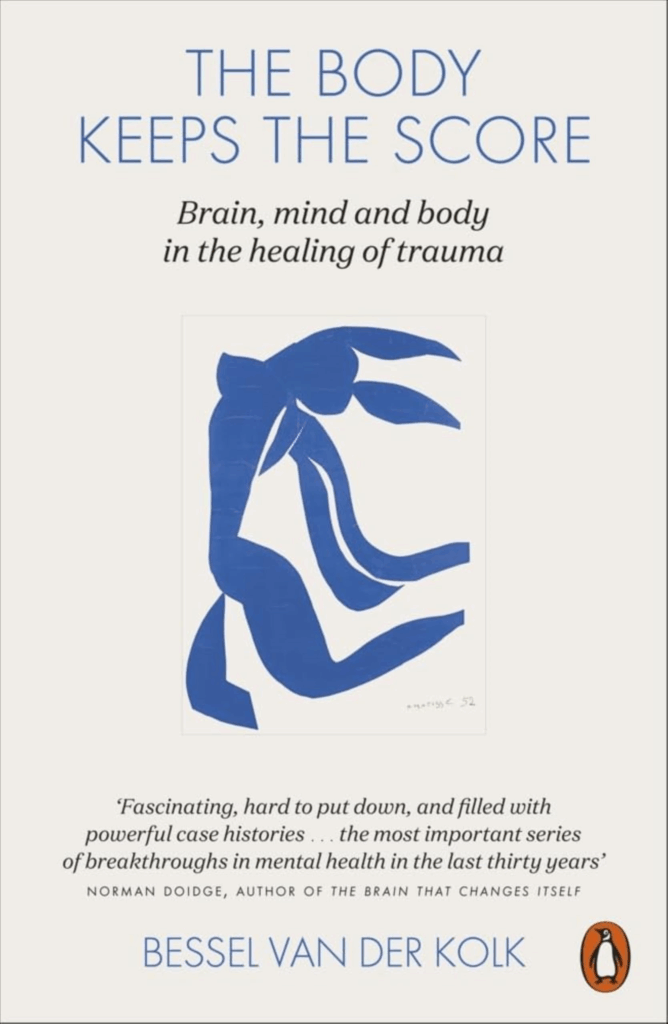
The Body Keeps the Score is not merely a book; it is a seminal work that has profoundly shifted the paradigm of trauma treatment over the past decade. Dr. Bessel van der Kolk, a globally recognized leader in post-traumatic stress studies, synthesizes decades of clinical experience and cutting-edge neuroscience to present a devastating yet ultimately hopeful thesis: trauma is not a story of the past to be merely narrated, but a physiological reality that fundamentally alters the brain, mind, and body.
The Embodied Reality of Trauma
The central premise of the book challenges traditional Western psychology, which has long relied on talk therapy and cognitive restructuring as primary methods for healing emotional distress. Van der Kolk argues that when a person experiences overwhelming stress or trauma, the brain’s integration centers—specifically the prefrontal cortex (the thinking, planning part) and the limbic system (the emotional, survival part)—malfunction. The “score” the body keeps is manifested through chronic physical pain, autoimmune issues, emotional numbness, hyper-vigilance, and an inability to feel fully present in the current moment. He expertly explains how the traumatic event remains trapped not as a coherent memory, but as raw sensory fragments and bodily sensations.
Van der Kolk utilizes compelling patient anecdotes alongside dense scientific data, making complex concepts remarkably accessible. He walks the reader through the history of trauma research, lamenting how the mental health establishment often failed to recognize the physical symptoms of PTSD, frequently misdiagnosing survivors with personality disorders or simple anxiety. This historical review alone provides crucial context for understanding why so many trauma survivors felt perpetually misunderstood by the system designed to help them.
Shifting from Top-Down to Bottom-Up Healing
Perhaps the most significant contribution of the text is its insistence on “bottom-up” approaches to healing. Traditional therapy is “top-down,” aiming to use thought and language to control feeling. However, since trauma bypasses the language centers (Broca’s area often goes offline during flashbacks), it cannot be solved by language alone.
The author dedicates significant sections to exploring and validating therapeutic methods that directly engage the body and the sensory experience. These include:
- Neurofeedback: Training the brain to self-regulate its waves.
- Mindfulness and Yoga: Allowing survivors to safely inhabit their bodies and develop interoception (awareness of internal bodily states).
- EMDR (Eye Movement Desensitization and Reprocessing): A technique that helps the brain reprocess traumatic memories.
- Theater and Rhythm: Using communal movement and synchronization to restore connection and safety.
These practical applications offer a path forward, emphasizing that the healing process must involve finding new ways for the body to feel safe in the world before the mind can integrate the past.
The Body Keeps the Score is a masterclass in clinical wisdom and scientific rigor. It is required reading not only for every mental health professional, but for educators, policymakers, and anyone who has experienced or knows someone who has experienced trauma. It delivers a message of hope: the damage of trauma is real and quantifiable, but so is the human capacity for neuroplasticity and recovery. It provides a comprehensive map for navigating the complex landscape of healing, demonstrating that liberation from the past begins when we learn to listen to the score our body has been keeping.
About The Author