
Partial Solar Eclipse Graces Southern Hemisphere Skies
SYDNEY, AUSTRALIA – A partial solar eclipse is underway today, captivating skygazers across the Southern Hemisphere. The celestial event, which occurs when the Moon partially obscures the Sun, is offering a striking spectacle for viewers in select regions, while remaining invisible from much of the rest of the world, including India.
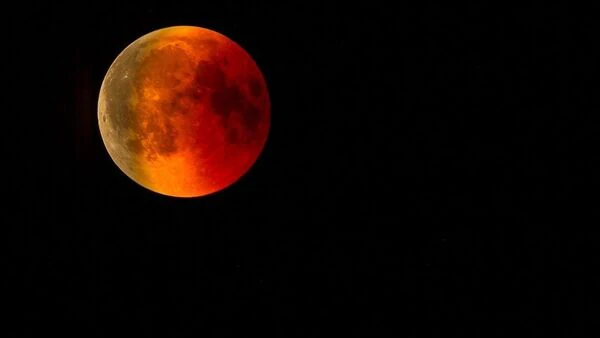
Visibility and Global Reach
The eclipse is a significant astronomical event for 2025 and is visible primarily in parts of Australia, New Zealand, and Antarctica. The alignment sees the Moon’s penumbral shadow graze the Earth, resulting in the Sun appearing as if a “bite” has been taken out of its disk. Observers in the most favorable locations, such as parts of New Zealand, will experience the most dramatic view, with a high percentage of the Sun’s surface being obscured.
For those in India, the event is not visible. Due to the timing of the eclipse, which is occurring overnight in the Southern Hemisphere, the Sun is below the horizon for all of India. However, the event remains a topic of widespread interest, with many following live streams from international observatories to witness the phenomenon safely.
Safety First: Viewing the Eclipse
Astronomers emphasize the importance of safe viewing practices for anyone attempting to observe the eclipse directly. Looking at the Sun without certified solar filters or appropriate eye protection can cause serious and permanent damage to the retina. Indirect viewing methods, such as pinhole projectors, also offer a safe way to observe the eclipse’s progression.
A Celestial Reminder
This partial solar eclipse is a reminder of the precise and elegant mechanics of our solar system, offering a moment of cosmic wonder and an opportunity for both amateur and professional astronomers to study the subtle interactions between the Earth, Moon, and Sun.
About The Author