
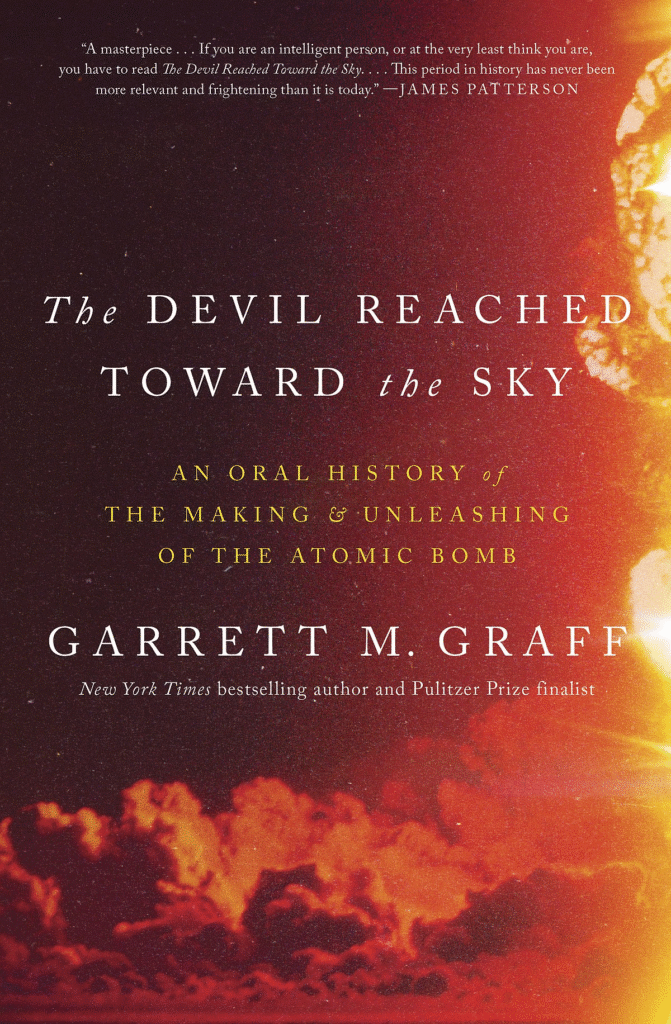
The Devil Reached Toward the Sky: An Oral History of the Making and Unleashing of the Atomic Bomb by Garrett Graff
⭐⭐⭐⭐⭐ (5/5)
A Monumental Achievement in Storytelling
Garrett Graff’s The Devil Reached Toward the Sky: An Oral History of the Making and Unleashing of the Atomic Bomb is a monumental achievement in historical storytelling. In an era inundated with narratives about the atomic age, Graff distinguishes his work by meticulously weaving together a tapestry of first-person accounts, offering an intimate and harrowing perspective on one of humanity’s most transformative and terrifying scientific endeavors. This is not merely a recounting of facts; it is a chorus of voices—scientists, soldiers, politicians, and civilians—each contributing a vital, often deeply personal, thread to the complex narrative of the Manhattan Project and its catastrophic culmination.
The Power of Oral History
Graff’s choice of the oral history format is undoubtedly the book’s greatest strength. By allowing the participants to speak for themselves, unfiltered by extensive authorial commentary, he grants the reader a rare sense of immediacy and authenticity. The sheer scale of the interviews, meticulously transcribed and arranged, provides a multi-faceted view that no single analytical account could fully capture. We hear the initial excitement and moral quandaries of the physicists grappling with uncharted territory, the immense logistical challenges faced by engineers and military personnel in remote desert locations, and the chilling detachment of those ordered to deliver the bombs. Most powerfully, we encounter the devastating aftermath through the voices of those who survived Hiroshima and Nagasaki, their testimonies serving as a stark, humanizing counterpoint to the technical and political discussions that precede them.
Navigating Moral Complexities
The book skillfully navigates the moral complexities inherent in the atomic bomb’s creation and use. Graff presents a balanced, albeit unsettling, portrayal of the various motivations and ethical compromises. The urgency of wartime, the fear of Nazi Germany developing a bomb first, the desire for a swift end to the conflict in the Pacific—these factors are explored through the lens of those who lived them, revealing the intense pressures and often conflicting beliefs that shaped decisions of unimaginable consequence. The narrative doesn’t shy away from the post-bomb reflections and the deep-seated regrets or steadfast justifications held by those involved, offering a nuanced glimpse into the psychological toll of such world-altering work.
Minor Quibbles, Major Impact
While the oral history format is immersive, it occasionally presents challenges for readers seeking a linear, purely chronological exposition. Graff does an admirable job of structuring the disparate accounts, but the very nature of multiple voices can sometimes make it difficult to follow a singular argumentative thread. However, this is a minor quibble, as the collective power of these testimonies far outweighs any slight loss of narrative straightforwardness. The extensive research and careful curation of these voices make The Devil Reached Toward the Sky an indispensable resource for anyone seeking to understand the human dimension of the atomic bomb.
A Profound and Essential Historical Document
In conclusion, Garrett Graff has delivered a profound and essential historical document. The Devil Reached Toward the Sky is more than a book; it is an experiential journey into the hearts and minds of those who built, deployed, and suffered the ultimate weapon. It serves as a powerful reminder of humanity’s capacity for both scientific brilliance and unimaginable destruction, urging reflection on the enduring legacy of the atomic age. For its comprehensive scope, its meticulous research, and its raw, unfiltered human perspective, this book stands as a definitive contribution to the understanding of a pivotal moment in history.
About The Author