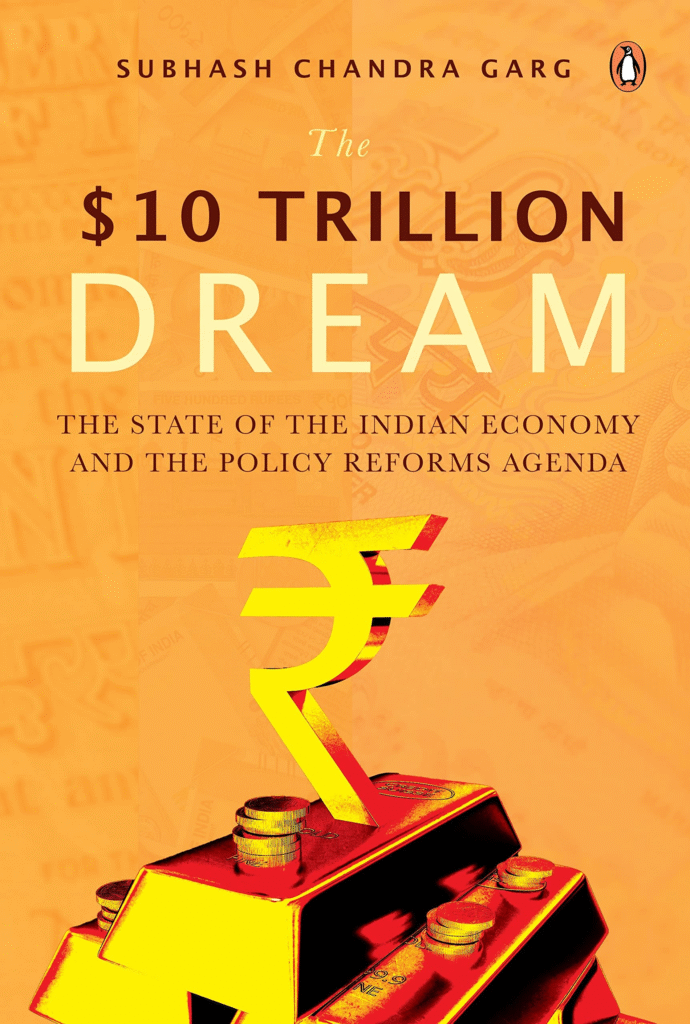
Unlocking India’s Future: A Review of The $10 Trillion Dream
Rating: ⭐⭐⭐⭐⭐ 5/5
Introduction and Author’s Perspective
Subhash Chandra Garg’s “The $10 Trillion Dream: The State of the Indian Economy and the Policy Reforms Agenda” offers a compelling and insightful examination of India’s economic trajectory and the ambitious goal of achieving a $10 trillion economy. As a former Finance Secretary, Garg brings a unique insider’s perspective, blending deep theoretical understanding with practical experience, making this book an invaluable resource for anyone interested in India’s economic future.
Structure and Comprehensive Analysis
The book is structured logically, beginning with an overview of India’s current economic standing and the historical context that has shaped its development. Garg meticulously dissects the various facets of the Indian economy, from agriculture and industry to services and infrastructure, highlighting both the inherent strengths and the persistent challenges. His analysis is grounded in data and presented with clarity, making complex economic concepts accessible to a broad audience, including policymakers, economists, students, and general readers.
Detailed Policy Reforms and Solutions
One of the book’s core strengths lies in its detailed exposition of the “policy reforms agenda.” Garg does not merely identify problems; he proposes concrete, actionable solutions across critical sectors. He delves into fiscal policy, monetary policy, financial sector reforms, trade, and social sector development, providing a comprehensive roadmap for sustainable growth. His recommendations are often bold and pragmatic, reflecting his extensive experience at the helm of economic policymaking. For instance, his discussions on public sector undertakings, taxation, and the need for structural changes in employment generation are particularly thought-provoking and highlight areas requiring urgent attention.
Clarity, Engagement, and Accessibility
Garg’s prose is lucid and engaging, avoiding overly academic jargon while maintaining intellectual rigor. He manages to convey the urgency and significance of India’s economic aspirations without resorting to hyperbole. The book serves not only as a diagnostic tool but also as a prescriptive guide, urging for a concerted effort from all stakeholders to realize India’s full economic potential.
Minor Criticisms and Overall Impact
While the book is largely commendable, some readers might find certain policy prescriptions debatable, as is often the case with economic policy. The sheer breadth of topics covered means that some areas might not receive the exhaustive depth that specialists in those fields might desire. However, this is a minor quibble given the book’s overarching objective: to provide a holistic view and a practical agenda for national economic transformation.
Conclusion: A Call to Action
“The $10 Trillion Dream” is more than just an economic treatise; it is a call to action. It is essential reading for anyone seeking to understand the intricacies of the Indian economy and the monumental task of steering it towards prosperity. Garg’s vision is optimistic yet realistic, acknowledging the hurdles while emphasizing the immense opportunities that lie ahead. This book is a significant contribution to the discourse on India’s economic future and a must-read for anyone invested in its success.
About The Author