
“A Precarious Promise: The Trump-Brokered Peace Deal Between DRC and Rwanda”
The Long Shadow of Conflict in Eastern DRC
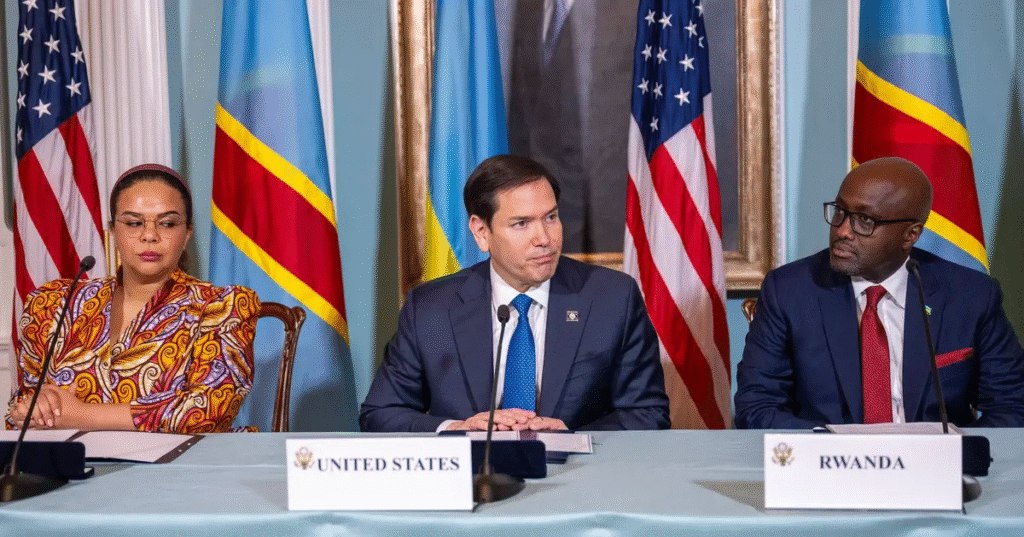
The news that the Democratic Republic of Congo (DRC) and Rwanda are reportedly on the cusp of signing a peace deal, brokered by President Donald Trump, has sent ripples across the international community. While the prospect of an end to decades of brutal conflict in eastern Congo is undoubtedly a beacon of hope for millions, the underlying motivations, the exclusion of key actors, and historical precedents cast a long shadow of skepticism over its long-term efficacy and true impact.
For years, eastern DRC has been a crucible of human suffering, ravaged by armed groups and proxy conflicts. The genesis of this instability is complex, deeply rooted in the aftermath of the 1994 Rwandan genocide, which saw millions of Hutu refugees, including perpetrators, flee into eastern Zaire (now DRC). This influx destabilized the region, leading to the First and Second Congo Wars, which drew in multiple African nations and resulted in millions of deaths. Rwanda has consistently been accused by Kinshasa and various international bodies, including the UN and Western countries, of backing rebel groups like the M23, which largely consists of ethnic Tutsis, to pursue its security and economic interests in the mineral-rich eastern DRC. Kigali, in turn, denies these claims, often citing the continued threat posed by the Democratic Forces for the Liberation of Rwanda (FDLR), a Hutu extremist group with links to the genocide, operating within the DRC.
A Diplomatic Push with Underlying Motives
The current peace initiative, facilitated by the US and Qatar, ostensibly aims to quell this violence. The draft agreement reportedly includes provisions for respect for territorial integrity, a prohibition of hostilities, the disengagement and disarmament of non-state armed groups, and the establishment of a joint security coordination mechanism. Trump has publicly championed the deal, expressing frustration over not receiving a Nobel Peace Prize for his diplomatic efforts. However, critical voices are quick to point out the deal’s ambiguities and the potential for it to serve interests beyond genuine peacebuilding.
The Economic Undercurrents and Concerns
A significant concern revolves around the unspoken economic dimensions of the agreement. Eastern DRC boasts immense mineral wealth, including cobalt, lithium, and coltan – resources vital for global technology, from electric vehicles to smartphones. The Trump administration’s renewed diplomatic push reportedly followed an offer from DRC President Felix Tshisekedi to facilitate direct US investment in the country’s mineral resources, seemingly aiming to counter China’s established dominance in the region’s supply chains. Critics, including Nobel Peace laureate Denis Mukwege, have voiced alarm, suggesting that such a deal risks legitimizing the plundering of Congolese natural resources and forcing the victim to sacrifice justice for a precarious peace. The concern is that this “peace for exploitation” bargain could become another instrument of neo-colonialism, where foreign powers dominate through economic means, extracting wealth without ensuring equitable benefits for the Congolese people.
The Challenge of Inclusivity and Historical Precedents
Furthermore, the exclusion of the M23 rebel group as a direct party to this specific US-brokered agreement raises questions about its practical implementation. While Qatar has been holding separate negotiations with the M23 and the Congolese government, the rebels themselves have indicated that any agreement made without their direct involvement would not be binding on them. This lack of direct engagement from a key armed actor could undermine the deal’s effectiveness in truly silencing the guns. The history of the region is replete with peace agreements and ceasefires that have ultimately failed to hold, largely due to a failure to address underlying grievances and the intricate web of armed groups.
Towards a Sustainable Peace: Beyond Geopolitics
While the prospect of a peace deal between the DRC and Rwanda offers a glimmer of hope, its success hinges on more than just high-level political signatures. For a lasting peace to take hold, it must move beyond geopolitical and economic maneuvering. It requires genuine commitment from all parties to address the root causes of the conflict, ensure accountability for past atrocities, and implement transparent frameworks for resource management that truly benefit the Congolese population. Without these fundamental elements, the Trump-brokered peace deal, despite its fanfare, risks becoming just another chapter in the tragic history of a region where peace remains elusive, often overshadowed by the relentless pursuit of strategic interests.
About The Author