Where Dignity Is Woven
Nand Kishore Chaudhary and the Jaipur Rugs Story
By Bhanu Pratap Singh | UnpauseYourself.com
A visit to Manpura in Rajasthan, and a reflection on the people, creative freedom and business decisions behind a global craft enterprise.
A beautiful rug invites us to look closely at its colours, texture and design. My visit to Manpura, one of Jaipur Rugs’ weaving centres in Rajasthan, left me thinking just as deeply about the people behind it.
In May, Shri Nand Kishore Chaudhary, Founder and Chairman of Jaipur Rugs, invited me to experience this work. I had offered to write about his journey and the organisation he built. The visit gave that intention a more personal meaning.
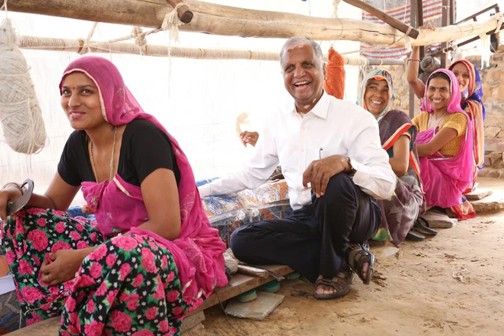
Nand Kishore Chaudhary (Bhai Sahab) with artisans at a loom. Reference photograph from his official website; not a photograph of my Manpura visit. Source: NKChaudhary.com
I went with my mother and maternal grandmother. Sharing the experience across three generations made it especially memorable. We encountered craftsmanship through the people practising it, and I came away with a question that has stayed with me: how should we measure a business when the skill and dignity of its makers are central to its value?
A business that began beside the loom
Chaudhary’s official biography traces the beginnings to Churu in 1978: a loan of ₹5,000 from his father, two looms and nine artisans. He learned weaving alongside them. That detail matters. His understanding of the enterprise began close to the work itself. [Source]
Today, Jaipur Rugs reports a network of more than 40,000 artisans across 600 villages. The scale is striking, but the underlying business challenge is equally interesting: connecting dispersed craft skills with customers who can appreciate and purchase the finished work. [Source]
Bain & Company has examined Jaipur Rugs as a case of social innovation, describing its connection between rural weaving communities and international buyers. The company’s story offers a practical subject for entrepreneurs: how to organise a business around talent that markets have often struggled to reach. [Source]
The people who give the story its meaning
At Manpura, I met Shanti Devi, Aarti Devi, Payal Bai and Sushila Devi. Their patience, dedication and skill made a deep impression on me. It is their names I want readers to remember alongside the name of the brand.
When we speak about artisans only as a workforce or a category of beneficiaries, we can lose sight of their knowledge. Craft demands judgement, concentration and experience. Recognising those abilities changes the conversation about rural enterprise: it asks how people can participate more fully in the value their work creates.
Zakir Khan and Shreya Agarwal guided us through the visit with warmth and care. Their welcome helped us engage with the people and purpose behind the work. That human connection is what made the experience stay with me.
Manchaha and the freedom to create
The wider Jaipur Rugs story includes an initiative that deserves particular attention: Manchaha. Chaudhary’s biography credits his daughter Kavita with launching Artisan Originals, now Manchaha, in 2012. [Source]
Jaipur Living describes Manchaha as a collection in which rural weavers create original designs using leftover hand-spun yarn. Their surroundings, memories and personal stories can become part of the rug. Creative decisions move into the hands of the person at the loom. [Source]
For me, this is the most compelling idea in the model. A maker can also be an author. The distinction has consequences for how a piece is understood, how its creator is recognised and what kinds of talent an organisation learns to notice.
It also gives a concrete meaning to material reuse: yarn remaining from earlier production becomes material for a new design. That specific practice is worth describing carefully. Its appeal lies in the combination of creative freedom and resourcefulness. [Source]
For anyone building a company, Manchaha raises a useful question: whose ideas remain unheard because we have defined their job too narrowly?
The work around the work
The Jaipur Rugs Foundation adds a further dimension. Jaipur Living’s account of its work describes skills development, education and healthcare outreach. [Source]
That wider attention matters because a livelihood sits within a life. Education, health and the ability to develop new skills influence whether someone can make use of an economic opportunity. An enterprise seeking lasting social value has reason to pay attention to those conditions.
My visit was a personal encounter with one part of this larger network. What it gave me was a stronger appreciation of the people whose work makes the business possible, and a reason to look more closely at the structures supporting them.
Staying close as a company grows
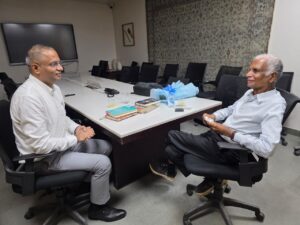
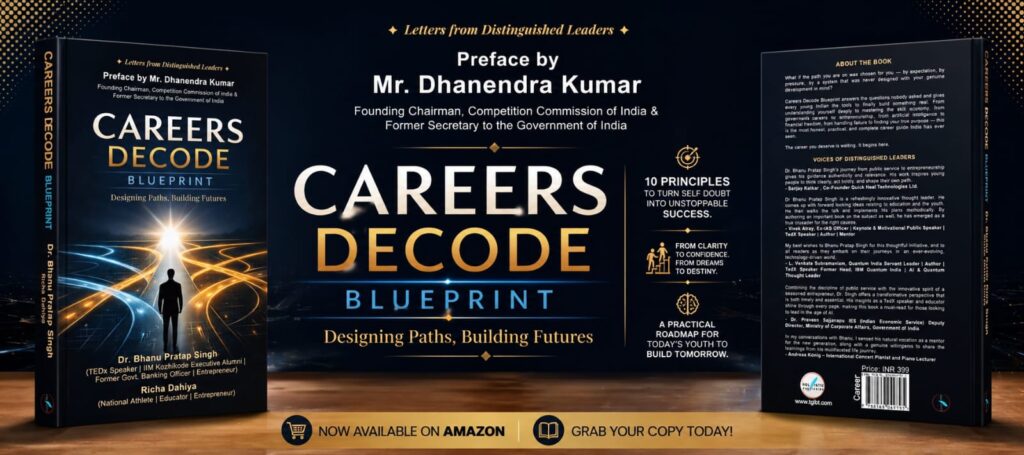
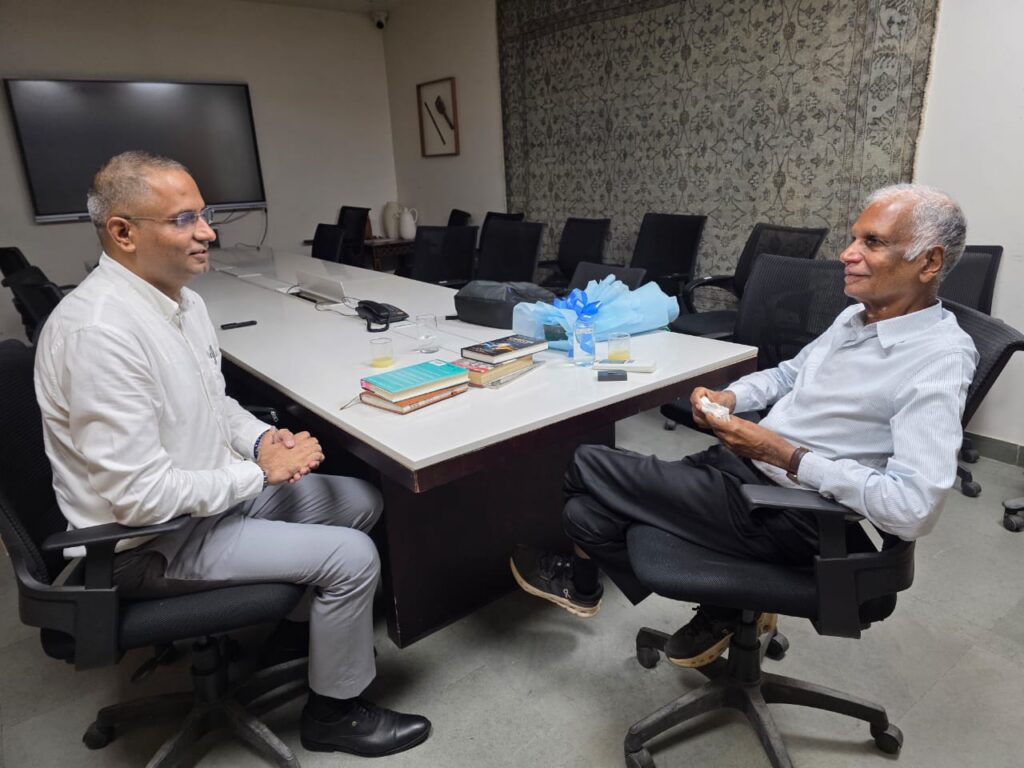
During my interaction with Chaudhary, I was struck by his simplicity, humility and clarity. We spoke about leadership, social impact and craftsmanship. I also had the privilege of presenting him with a copy of Careers Decode Blueprint.
His public philosophy places empathy, integrity and shared learning at the centre of business. My reading of that philosophy is practical: leaders learn more when they remain accessible to the people doing the work. [Source]
Bain’s 2016 account introduces an important complication. Growth had threatened to distance the founder from the frontline; reconnecting helped renew the company’s innovative spirit. That makes the story more useful. Staying close to artisans requires decisions and effort as an organisation expands. [Source]
As an entrepreneur, I see a demanding lesson here. Respect must influence everyday choices: whose knowledge is sought, who has room to contribute an idea, and whether the person making a product remains visible in the story told about it.
What I brought home from Manpura
I went to Manpura to understand the work of Jaipur Rugs. I returned with a deeper appreciation of what it takes to recognise the person within the process.
The visit also changed the way I think about luxury. Beauty can draw us towards an object; understanding the work behind it can deepen our appreciation. Once we know something of the maker, the finished piece carries a different significance.
I remain grateful to Shri Nand Kishore Chaudhary for the invitation, to the team for receiving us, and to the artisans for sharing their world with us. Writing this story is my way of honouring that experience.
When I remember Manpura, I remember Shanti Devi, Aarti Devi, Payal Bai and Sushila Devi. They are the people I hope this article brings into view. The rug deserves our admiration. Its maker deserves our attention.
About the author
Bhanu Pratap Singh is an entrepreneur, TEDx speaker, International Speaker, Forbes India Featured, author of Careers Decode Blueprint. He writes about enterprise, careers and purposeful leadership.
This personal reflection follows a visit made at the invitation of Nand Kishore Chaudhary.
Official websites
About The Author