
Naval Maneuvers in the Caribbean: A New Front in the War on Drugs, or a Troubling Escalation?
The Official Rationale: Disrupting Drug Flows
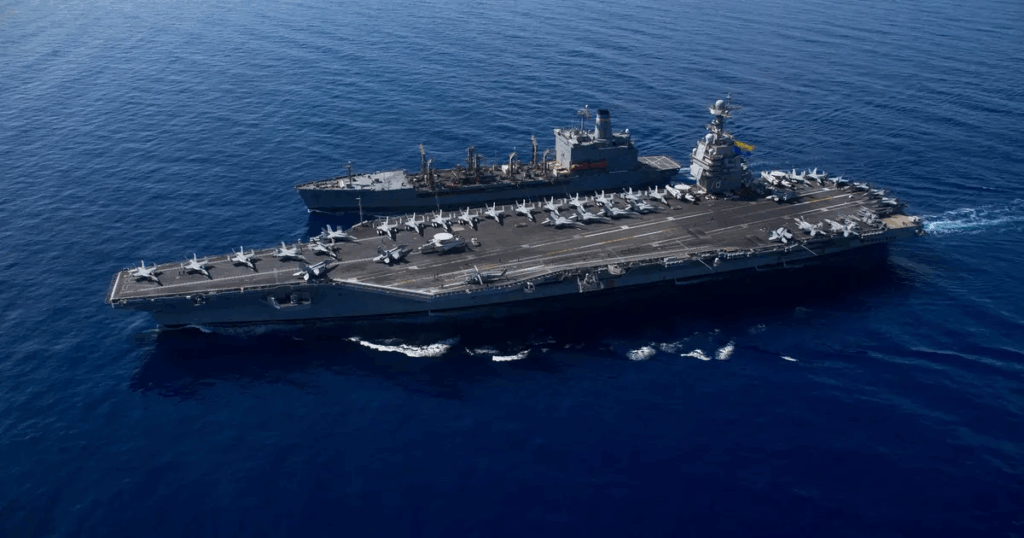
The Pentagon’s decision to deploy the USS Gerald R. Ford, one of its most advanced aircraft carriers, to the Caribbean under the guise of disrupting narcotics trafficking has ignited a firestorm of debate, raising critical questions about U.S. foreign policy, regional stability, and the true motivations behind such a significant military presence. U.S. officials maintain the deployment is a targeted effort to combat illicit drug flows. The Caribbean, with its vast maritime expanses, has historically been a critical transit point for drug shipments en route to North America and Europe. Proponents argue that a formidable naval asset like the Ford, equipped with advanced surveillance and airpower, is necessary to enhance interdiction efforts against increasingly sophisticated traffickers, asserting that traditional law enforcement is insufficient to stem the tide of drugs that fuel violence and corruption.
Criticism: Militarization and Escalation
Despite the official anti-drug mission, the sheer scale and symbolism of deploying a top-tier aircraft carrier extend far beyond routine operations. Critics are quick to decry the move as a “major escalation” and a blatant “militarisation of the Caribbean.” The deployment transforms the character of U.S. engagement, shifting from cooperative law enforcement to a more overt military posture. This raises concerns about the potential for unintended consequences, including heightened tensions with sovereign nations in the region and the risk of miscalculation. The introduction of such a powerful asset is seen as a disproportionate response that could destabilize an already sensitive geopolitical environment.
The Venezuelan Context: Political Pressure as a True Motive
The most potent criticisms are inextricably linked to the deteriorating relationship between the United States and Venezuela. The U.S. has for years been a vocal critic of the Venezuelan government, imposing sanctions and supporting opposition movements. Against this backdrop, deploying a carrier strike group to Venezuela’s maritime doorstep is widely interpreted as more than just an anti-drug measure. Critics suggest that the narcotics trafficking narrative serves as a convenient pretext for increasing military pressure on Caracas, potentially paving the way for more direct intervention or a powerful demonstration of force intended to destabilize the Maduro regime. The charge of “inventing a war” underscores the apprehension that the U.S. might be seeking to create a justification for broader military action.
Long-Term Implications for Regional Stability
The long-term implications of this deployment remain to be seen. While it may lead to a temporary disruption of drug flows, the fundamental issues driving narcotics trafficking, poverty, demand, and systemic corruption, are unlikely to be resolved by military means alone. Furthermore, the potential for exacerbating regional instability and alienating allies is a significant risk. The deployment of the USS Gerald R. Ford to the Caribbean therefore stands as a stark reminder that in the realm of international relations, actions often speak louder than stated intentions, and the line between legitimate security concerns and geopolitical maneuvering can often become blurred.
About The Author