The Infinite Game: Why Mega-Franchises Replaced the Standalone Action Film
The history of cinema is littered with one-hit-wonder blockbusters, films that soared at the box office only to see their sequels stumble, proving the difficulty of sustained action movie success. Today, that model is obsolete. The modern blockbuster landscape is no longer defined by the solitary hero film, but by the sprawling, interconnected saga. The cinematic universe, exemplified by the Marvel Cinematic Universe (MCU), the improbably durable Fast Saga, and the meticulously stylized John Wick series, has become the new default setting for the global action genre.
This seismic shift is not merely a creative preference; it is a meticulously engineered business strategy built on three core pillars: narrative interconnectedness, mitigating financial risk, and maintaining aesthetic fidelity.
The Marvel Blueprint: Interconnected Storytelling as Investment
The MCU, undoubtedly the architect of the modern universe model, did more than adapt comic books; it perfected the art of the narrative drip-feed. Before 2012’s The Avengers, a shared-world structure where characters from separate franchises (like Iron Man and Captain America) regularly teamed up was commercially unthinkable.
The genius of the MCU lay in conditioning audiences to view every entry not as a self-contained story, but as an essential chapter in a far grander narrative. This created a compulsory viewing cycle. Missing Ant-Man might mean missing a crucial plot point for Avengers: Endgame. This model transforms passive entertainment into an active, long-term investment for the viewer. Studios now offer a “high floor” for every film—even a critically weaker entry is guaranteed a substantial box office return because it services the larger, beloved narrative machine.
The Fast Saga: Longevity Through Genre Elasticity
While the MCU operates on the fidelity of source material, the Fast Saga demonstrates the power of genre fluidity and character loyalty in the mega-franchise era. What began in 2001 as a street racing crime drama evolved into a physics-defying, globe-trotting action spy thriller where cars become tanks and space travel is just another Tuesday.
The saga’s longevity is rooted not in preserving its original premise, but in its willingness to aggressively jettison it in favor of heightened spectacle and, crucially, a relentless focus on the themes of “family.” By turning the ensemble into a loyal, aspirational unit, the franchise secured a multi-generational, international audience that returns for the characters, regardless of how outlandish the plot becomes. It proves that the action mega-franchise can be sustained without a pre-existing IP, provided the core emotional stakes—and the spectacle—remain consistently elevated.
The John Wick Model: Aesthetic Fidelity and Choreographic Excellence
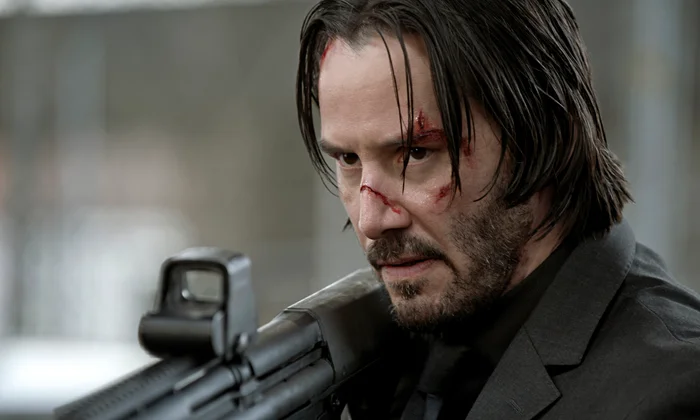
A third, equally compelling model is presented by the John Wick franchise. This series, built around a singular, highly effective character, rejects the multi-franchise crossover model and the need for constant genre shifts. Instead, its longevity stems from an unwavering commitment to two core elements: a consistent, stylish neo-noir aesthetic, and world-class action choreography known as “gun-fu.”
The success of John Wick is proof that a franchise can thrive in the blockbuster age by prioritizing practical, high-quality, and tightly focused spectacle. The steady, detailed expansion of its unique criminal underworld—the Continental Hotel and the High Table—allows for sequel development based on depth and aesthetic quality, providing the audience with a reliable investment in consistent, superior execution rather than just massive scale.
The Economic Imperative
The primary drive behind the mega-franchise is mitigating the enormous financial risk associated with launching nine-figure tentpole films. A standalone, original action film requires Herculean marketing and a lucky break to succeed internationally. A pre-established universe, however, is a known quantity, whether it’s through narrative connection, character loyalty, or aesthetic quality.
Cinematic universes offer unparalleled synergy. Characters and plot threads can be cross-promoted across movies, streaming shows, theme parks, and merchandise, creating multiple revenue streams from a single investment. The combined power of the MCU, the Fast Saga, and the John Wick series at the global box office demonstrates that these interconnected spectacles have completely eclipsed the market share once held by disposable, single-entry action films. The goal is no longer to make a successful film, but to build an ecosystem.
The age of the solitary action masterpiece may be over, but the age of the sprawling, character-rich, and meticulously designed epic is just beginning. The mega-franchise has set a new, towering benchmark for what it means to be a modern blockbuster.
About The Author