
Andreas König – International Concert Pianist and Piano Lecturer

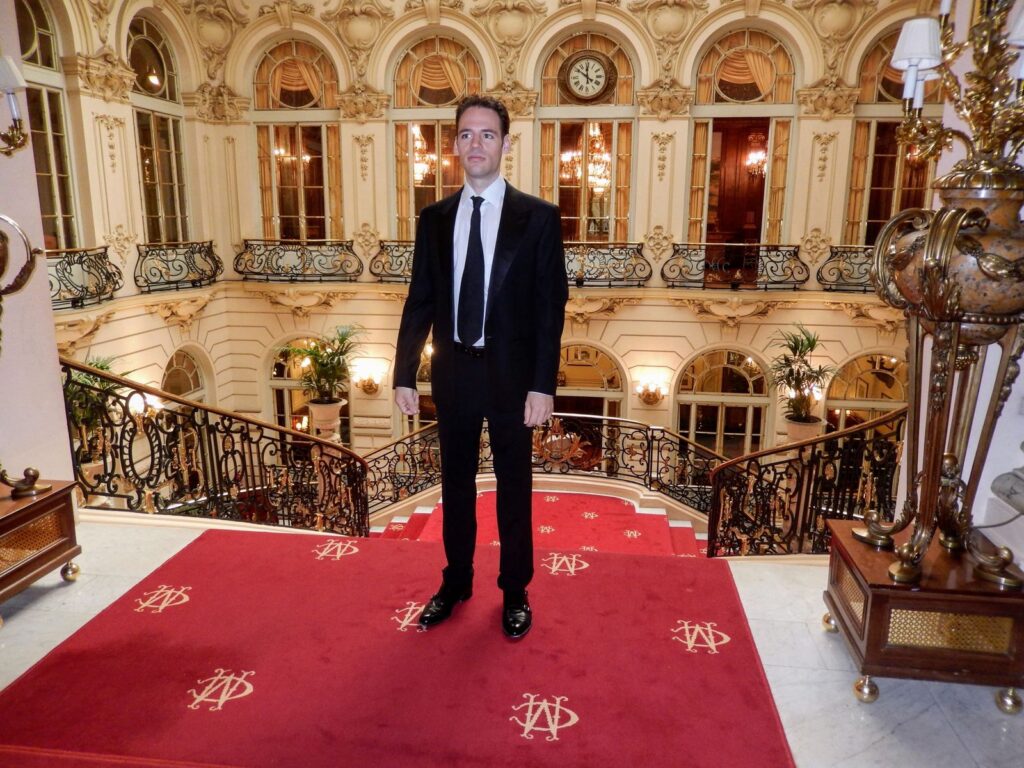
An internationally acclaimed German pianist active across Europe and Asia, Andreas König is a distinguished graduate of the Frankfurt University of Music and the prestigious Escuela Superior de Música Reina Sofía in Madrid.
He has performed as a soloist with leading orchestras and has appeared in renowned concert halls across major cultural capitals including Berlin, Lisbon, Madrid, and New Delhi.
In addition to his international concert career, he currently serves as a piano lecturer for senior students and in teacher training at the Delhi Music Society, contributing actively to the development of the next generation of pianists.
Website: https://www.andreaskoenig.es
The primordial sound
Finding something that can express what is happening inside our soul, is a relief for everyone. Our contemporary world is not too conducive to such expression, the zeitgeist is just not precisely romantic. Even if things are going well, it can feel a bit dry and barren. Life wants to be lived through the senses as well, not only through the intellect and its precepts.
There is this one primordial element, which has ever since been THE promoter of expression.
Sound is primordial. Intuitively, and when pondering deeper questions, we know it. In our day-to-day life we perceive music often only as a background noise, an adornment, entertainment- in ascending order.
Nevertheless we can be assured, there are sounds out there that are capable of much more. If music is conceived as coming from a realm without the constraints of matter, it can have miraculous impact on us.
It reminds us of what we really are and helps us in our desire to elevate ourselves over the worldly occupations and preoccupations.
Again, intuitively we know most of these are ephemeral, however urgent or important they might present themselves to our restless minds.
Why is it that Lord Krishna awakened the spiritual desire among the humans he crossed paths with – through sounds, through his music?
And why should we not desire the same, this kind of uplifting experience, through music? We will more likely find it, if we seek it and therefore are selective with the music we surround ourselves with. The music you hear, you play, you sing does not uplift? It only means that tastier fruits are waiting for you, but often we have to explore in order to find them.
The ancients did well to personify Music. For them, it came from the Muses. For us, at least we have the word itself, as an elusive reminder. To „think“ with these personifications is alien to us, but we can acknowledge that there is hidden wisdom in it. How do you see the role of music, when your imagination of it is an enticing being? A being whose presence is a blessing, who makes you feel accompanied, and encouraged to pour out what is within your soul.
No need to be scientific when not dealing with science. Even our scientific mind needs some place to step back and put itself together again.
And on a broader scale, shifting from the individual to society:
Whatever it is that many people focus on persistently, this will become more prevalent in our physical world as well. So why not focus on aesthetics, mastery, harmony?
Unless we are enlightened masters though, it is hard to be so idealistic, just like that. Almost impossible: the environment seems to constantly oppose us. And we are even inclined to absorb the worse facets of it, thanks to the negativity bias of our brain.
Yet through music we are all able to achieve exactly that: to enter in the flow, to disengage from being determined by “the environment”, to have our senses centred on mastery, harmony, aesthetics. To fill ourselves with refinement and enjoyment.
One of the major factors of misalignment: We are absorbed so much in a secondary reality. We see the world through screens. We don’t see the tree, the water, the sky, the bird, but pixels on a screen which simulate them – but the same happens with the sound.
At least, we are becoming more and more aware of it, and also of the fact that dealing with the primordial reality makes us feel more alive than dealing with the simulation.
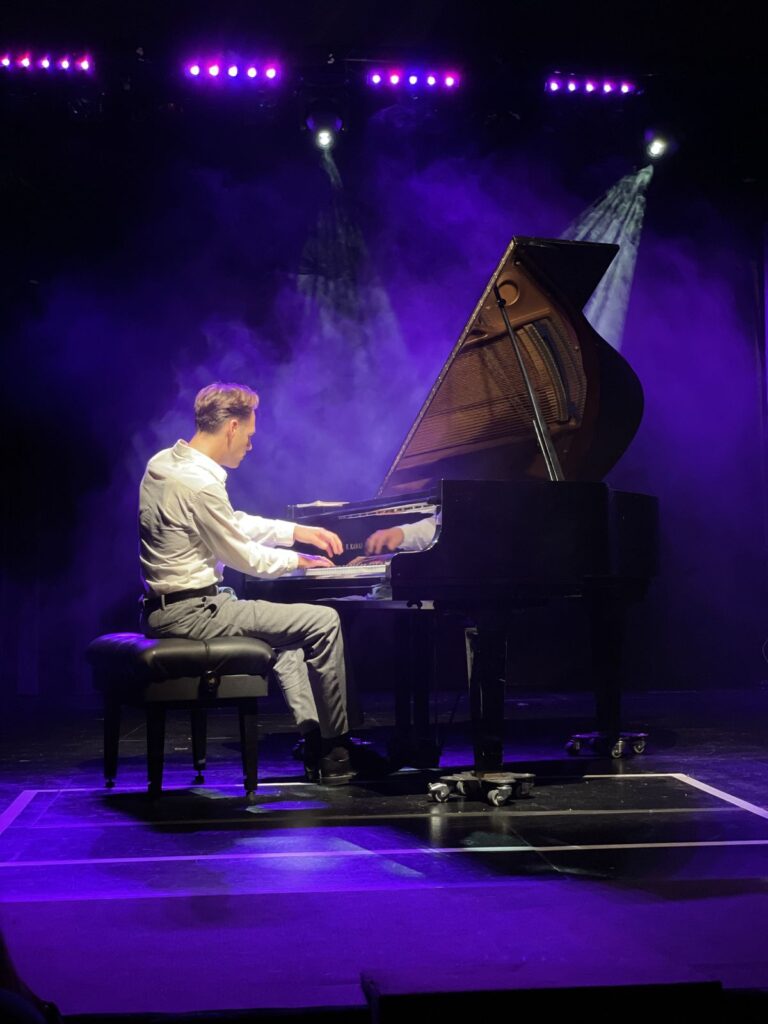
When it comes to our sound-environment, we have yet to realise fully this difference. What it means to replace the strings of an instrument, its wooden soundboard, masterfully built, felt hammers which bring the strings into vibration. What it means to replace all of that with a simulation, emitting digital output through a loudspeaker.
It really is the equivalent of dealing with screens in the visual realm. Nonetheless the awareness of this situation in our acoustic environment is far lower than the awareness that we are substituting our visual world with a simulation. In both realms it is an equally fundamental observation.
Of course, also the secondary visual and audio worlds can stir our feelings, we can learn and interact there as well – nevertheless, if we are for too long and too continuously away from the primary world, it will affect us. Existence becomes duller when we inhabit primarily the monitor world. We have a longing for higher realities, not for lower ones.
Especially in our current times it is also essential to point out the following: no matter how much you perfect the simulation, it never “becomes reality”. This is apparent to us in the visual world, but not so much in the sound world. But actually, listening to a recording through a loudspeaker, instead of listening to a musician (or yourself…) playing on an instrument – is the equivalent of staring at a screen rather than for example looking at an artwork in front of us.
For generations already, music is what comes out of loudspeakers and headphones. But it is not.
Let us remember where the word Music comes from.
About The Author